Discover the Back To School Collection Discover the Back To School Collection
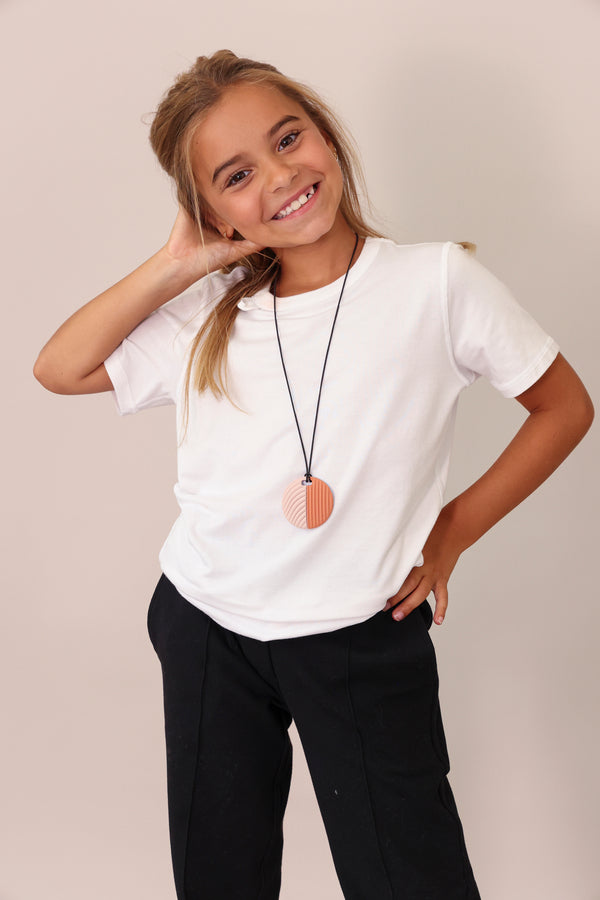
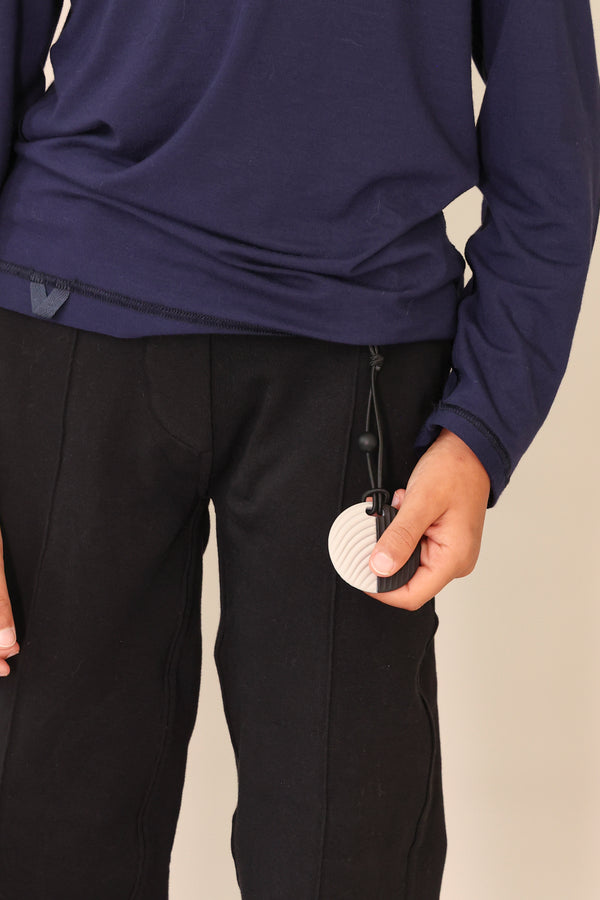
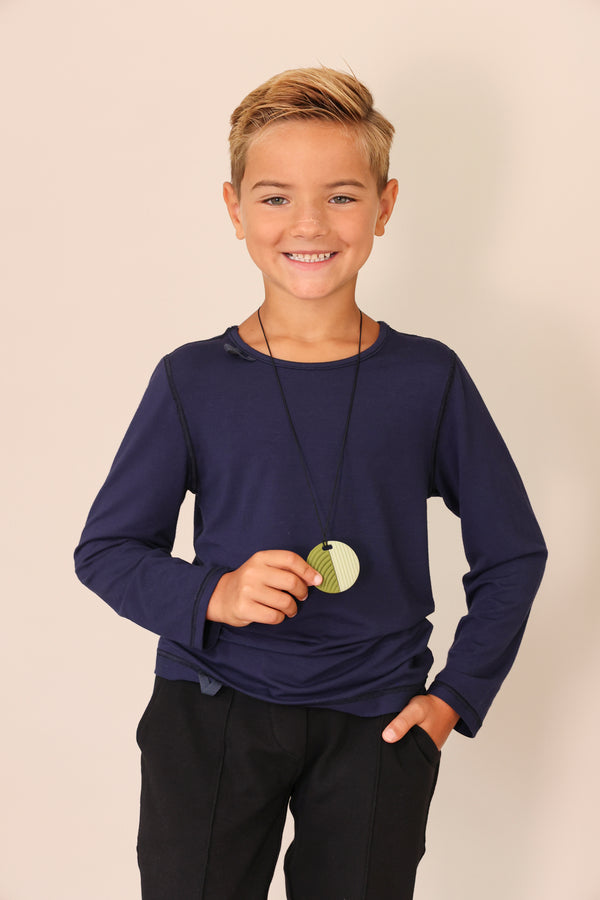
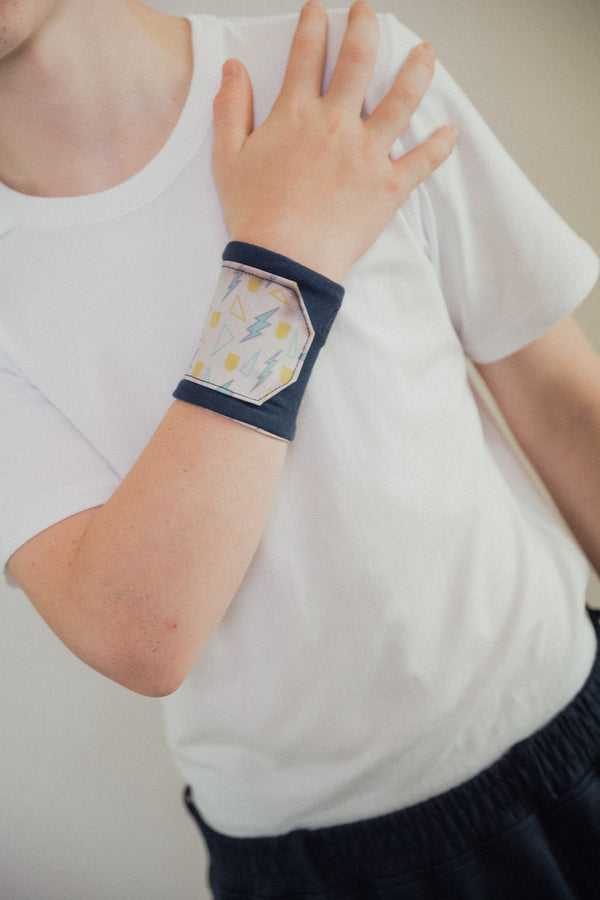
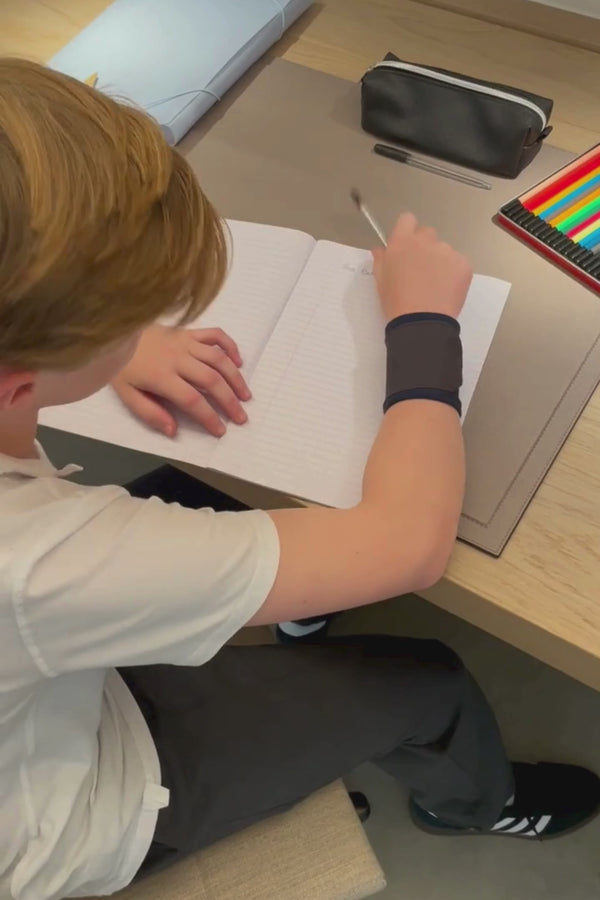
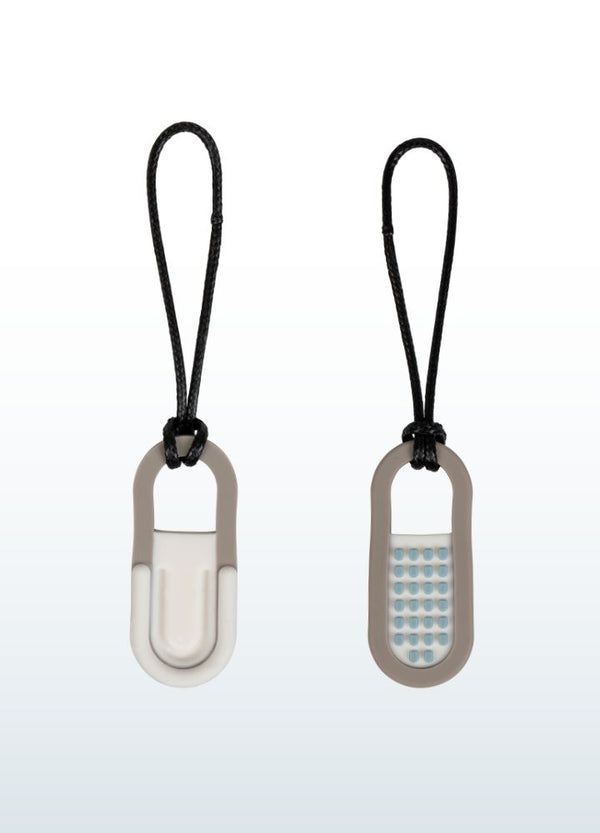
A fidget that works at school is silent, so it does not click or rattle during a lesson. It is wearable on the wrist or around the neck, so it cannot roll away or be left behind. Anything that goes in the mouth is BPA-free, food-grade silicone. And it looks like a bracelet or a necklace rather than a toy, so your child can use it without looking and without drawing attention. Chewing is a form of regulation. Many children chew on collars, cuffs or pencil ends without realising it, and a chewy fidget gives them something made for the job: food-grade silicone that protects clothes and teeth and can simply be washed in warm water with a mild, fragrance-free soap. The fidgets that get confiscated are the ones that make noise or draw a crowd. These stay on the body, make no sound, and from across a classroom they look like jewellery, which is exactly why most schools allow them. They suit children from toddlers to teens, and older children usually prefer the bracelet or keychain versions because those do not read as a toy. Not sure where to start? Watch what your child already does. Chewing on clothes points to a chewy, restless hands point to a tactile fidget or a bracelet, and letting them choose the colour makes it far more likely they will actually use it. Sensory fidget toys and chewable jewelry for kids support focus, self-regulation and calm, at school, at home or on the go. Designed for children with sensory sensitivities, ADHD, autism or anxiety, and for chewing needs and restless hands. A fidget lowers the daily sensory load, but it is not a medical device and it does not treat ADHD, autism or sensory sensitivity. If your child’s sensitivity affects their sleep, their schooling or their daily life, talk to your GP, a paediatrician or an occupational therapist.