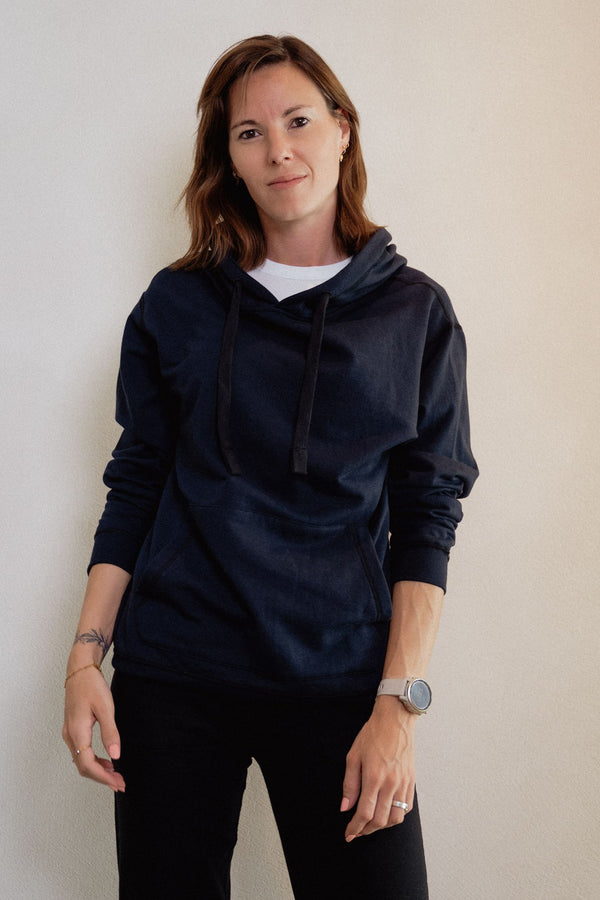
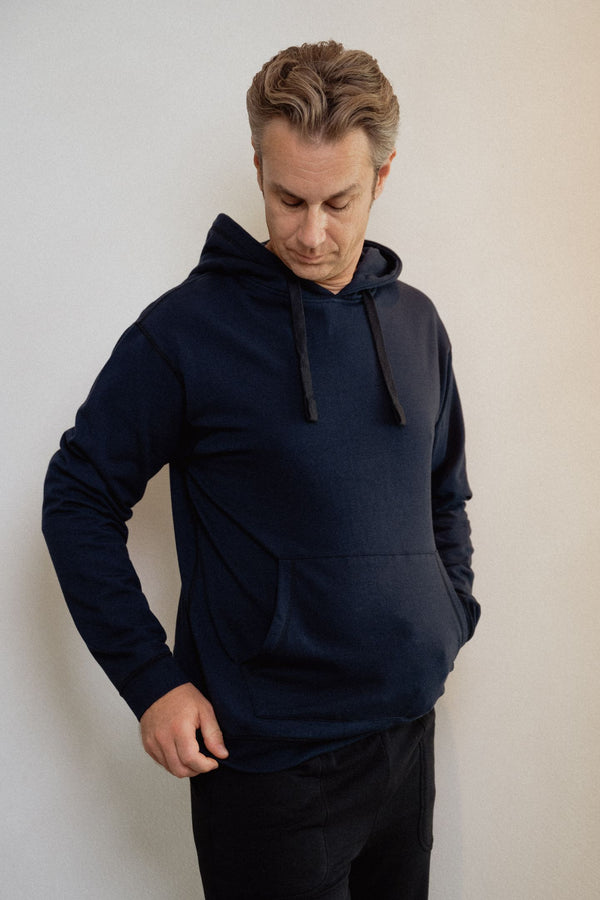
Long meetings, crowded trains, a mind that will not settle. A fidget hoodie gives you two things at once: fabric that asks nothing of your skin, and something quiet to do with your hands.
Sale
New
What makes these hoodies different is mostly what has been left out. No labels sewn into the neck to scratch or distract, flat seams so nothing presses along the shoulders or sleeves, and an ultra-soft, breathable fabric for skin that feels touch intensely. What has been added is a silent bead that slides along the drawstring, plus loops inside the kangaroo pocket to clip your own fidget to, so it stays within reach and does not get lost.
They are made for anyone who feels touch intensely. Many autistic adults, adults with ADHD and highly sensitive people recognise it: clothes that feel perfectly normal to everyone else rub, press or are simply too much. For sensitive or reactive skin, a hoodie without labels and with flat seams makes a real difference too. And sometimes no explanation is needed at all. You just want something soft to put on at the end of a day that took a lot out of you.
A fidget hoodie works discreetly. The bead makes no sound and draws no attention, which makes it usable in a meeting, on a commute or anywhere a visible fidget toy would feel out of place. The input stays available and nobody needs to notice.
A few practical things. From the outside it looks like an ordinary hoodie, which is exactly what makes it wearable at work. Choose a comfortably roomy fit, because for many people the enveloped feeling is part of what calms them. Wash cold or lukewarm with a mild, fragrance-free detergent and no fabric softener, and air-dry where possible so the fabric stays soft for longer.
Sensory-friendly fidget hoodies and sweaters for adults combine tag-free, seamless comfort with a discreet way to self-regulate, at work, at home and on the way there. Made for autistic adults, adults with ADHD, highly sensitive people and anyone with sensitive skin. A fidget hoodie lowers your daily sensory load, but it is not a medical garment and it does not treat sensitivity, autism or ADHD. If your sensitivity affects your sleep, your work or your daily life, talk to your GP or an occupational therapist.