Why getting dressed costs so much energy | Blusss in Hoogbegaafd het Magazine

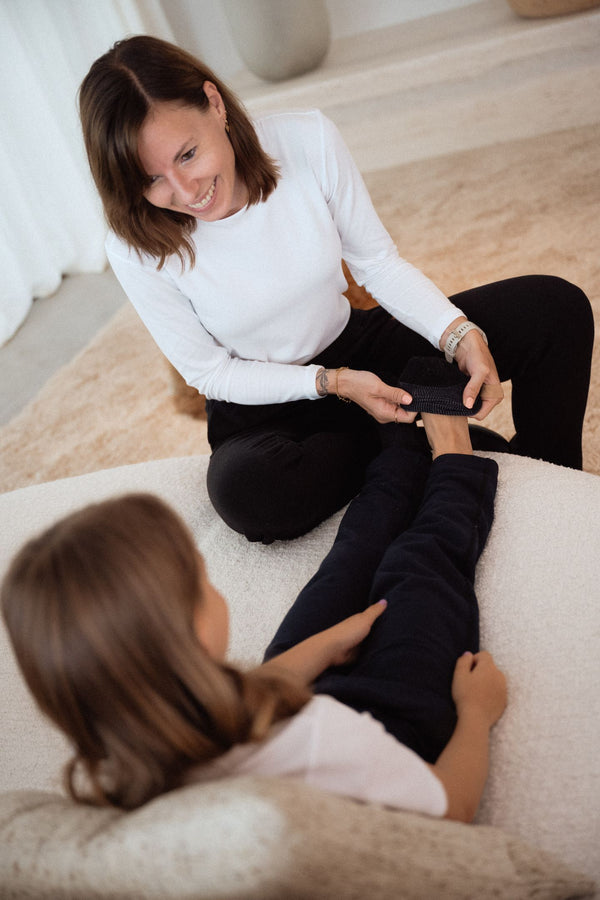
For some children, getting dressed isn't a routine. It's the hardest moment of the day. A sock with a seam you can feel, a label that itches, a fabric that simply isn't right: it sounds small, and yet it can decide how the whole morning goes. In the autumn edition of Hoogbegaafd het Magazine, Blusss founder An Luyten is interviewed about exactly that. Below you'll find why it matters and what you can try at home. The conversation itself is in the magazine.
In the press
Blusss founder An Luyten in Hoogbegaafd het Magazine #7, in the feature "Wat ben je toch gevoelig!" on pages 16 and 17.
Autumn 2026 edition, published by Hoogbegaafd de Gids. The magazine is in Dutch.
Why clothing lands harder when you experience stimuli intensely
People who experience stimuli more intensely feel clothing longer and more strongly. The brain doesn't filter out the touch of a seam or a label, so the sensation keeps running in the background all day.
That costs energy. Not only while getting dressed, but at school, during play and at the dinner table. What is a detail to one person is constant noise to another. And that noise takes up attention that can't go to learning, playing or relaxing.
What is sensory sensitivity?
Sensory sensitivity means your senses pass on stimuli more strongly than average. Touch, light, sound or smell arrive more intensely and fade into the background more slowly. With clothing, this often shows up as resistance to seams, labels, elastic or particular fabrics. It isn't a matter of not wanting to: the body simply registers the stimulus more loudly.
Sensory sensitivity occurs in everyone, at every age. It's just more visible in children, because they still show their discomfort directly.
How Blusss started
Blusss started at home, out of the daily morning struggle around clothing. An went looking for clothing that was soft as well as beautiful, couldn't find it, and decided to develop it herself.
Today Blusss makes sensory-friendly clothing and quiet solutions for children, teenagers and adults, worldwide. What that step actually looked like, from her background as an engineer to the moment she started out on her own, she describes in the interview.
Four steps to a calmer morning
- Look for the source, not the culprit. Feel the garment yourself: where is the seam, the label, the tight cuff? Name it together, without judgement.
- Start with the layer against the skin. Socks, underwear and t-shirts decide most of how the day feels. Change those first.
- Offer a choice within a small frame. Two options that both feel good give a sense of control without endless discussion.
- Lay out the outfit the night before. Deciding costs stimuli. Deciding in the evening makes the morning noticeably quieter.
Is there a link with giftedness?
There is overlap, but they aren't the same thing. Sensory sensitivity occurs in people with and without giftedness. What the two share is that stimuli arrive more intensely and fade more slowly.
In the magazine, An goes deeper into that overlap and into what she recognises in herself. What we will say here: we don't settle for clothing that is comfortable enough. Material, finishing and design are considered together, with feedback from the people who wear the clothes every day.
Many parents recognise this. We regularly get messages from families for whom getting dressed was the hardest moment of the day for years, and for whom it grew quieter. One of those messages comes back in the interview. It's the story An retells most often, and we're happy to leave it in the magazine itself.
Also in the magazine: Rosy of Favorite Family
Apparently there's no such thing as coincidence: An is featured right next to Rosy of Favorite Family. Rosy is a fellow entrepreneur with the same starting point, and for over a year now we've been buying our favourite gentle, fragrance-free body lotion from her. Two brands we personally use, sharing the same pages. That makes this feature extra nice.
Where to read the full interview
The interview is in Hoogbegaafd het Magazine #7, the autumn edition from Hoogbegaafd de Gids, on pages 16 and 17 under the title "Wat ben je toch gevoelig!".
In the conversation itself you'll read, among other things:
- why An left her steady job to start Blusss
- which message from a mother has stayed with her to this day
- what she recognises in herself from giftedness, and what she doesn't
- where she wants Blusss to be ten years from now
The edition runs to 84 pages of interviews, columns and articles on giftedness, including pieces on fawning, impostor syndrome and the move from primary to secondary school. You can order it at hoogbegaafddegids.nl.
Recognise the morning struggle around clothing? Start with the layer against the skin. Our seamless socks and label-free t-shirts are designed not to be noticed, in the gentlest way.

Frequently asked questions
Why does clothing itch so badly for some children?
Because their senses pass on the touch more strongly and filter it out more slowly. A seam or label stays noticeable all day instead of disappearing after a minute.
Is sensory sensitivity the same as giftedness?
No. There is overlap, but they are two different things. Sensory sensitivity occurs in people with and without giftedness.
Where do you start when getting dressed is a daily battle?
With the layer against the skin: socks, underwear and t-shirts. Those most strongly determine how the rest of the day feels.
Do children grow out of this?
Some do, some don't. Plenty of adults still avoid certain fabrics or cut out labels. Comfortable clothing stays useful at every age.
What makes clothing sensory friendly?
No sewn-in labels, flat or hidden seams, soft elastic, and fabrics that keep their softness after washing.
Who does Blusss make clothing for?
For children, teenagers and adults who experience stimuli more intensely, and for anyone who simply likes to be comfortable.
Where can I find the article about An in Hoogbegaafd het Magazine?
In edition #7 (autumn 2026), on pages 16 and 17, available at hoogbegaafddegids.nl.
Key takeaways
- Clothing can be a daily source of stimuli: for some people a seam or label stays noticeable all day.
- Blusss started at home, out of the morning struggle around clothing, and grew into sensory comfort for children, teenagers and adults.
- The full interview is in Hoogbegaafd het Magazine #7, pages 16 and 17.