Knee-High Socks for AFOs and Leg Braces: What to Look For

Does your child wear a leg brace or ankle-foot orthosis (AFO)? Then the sock underneath matters more than you might think. The right knee-high sock protects the skin, stays in place and adds no extra pressure inside the brace. This guide explains what to look for, step by step.
Many parents only start looking for better socks after the first red marks appear. A regular sock can wrinkle, slide down or press a seam into the skin for hours. For children who experience touch more intensely, that small irritation can turn every morning into a struggle.
What is an AFO, and why does it need a sock?
An AFO needs a sock because a thin layer between skin and brace reduces rubbing, absorbs sweat and helps prevent pressure spots.
Ankle-foot orthosis (AFO): a brace that supports the foot and ankle. It is usually worn inside a shoe and reaches up the lower leg to just below the knee. An AFO is made to measure by an orthotist, and many parents simply call it a splint.
Orthotists often recommend wearing a sock under the brace. Hard plastic or carbon directly against the skin warms up quickly and can rub, especially during a long school day.
Why a knee-high sock works best under a brace
A knee-high sock works best because it covers the whole part of the lower leg where the brace sits.
A crew sock often ends right where the brace begins, so the edge of the brace rests on bare skin. A knee-high sock protects the skin from the toes up to the top of the brace. Check that the sock reaches at least as high as the brace itself.
5 checks for socks under an AFO
The best socks for AFOs are thin, seamless, smooth, non-binding and breathable. Go through these five checks before you buy:
- Length: the sock covers the lower leg where the brace sits, ideally a little higher.
- No toe seam: a seam you barely notice in a shoe gets pressed into the skin inside a brace.
- No tight ribbed cuff: a firm elastic band at the top can leave red lines right above the brace.
- A smooth, thin knit: the sock lies flat without wrinkles or bunching, so the brace keeps its fit.
- Soft, breathable yarn: skin under a brace warms up fast, so choose a fabric such as bamboo that helps regulate moisture.
Why the top of the sock matters so much
The top of the sock matters because a tight cuff presses into the skin right where the brace already ends.
Many knee socks use a firm ribbed cuff to stay up. On a leg with a brace, that creates a second pressure line just above the first one. Look for a sock that stays up thanks to soft, even stretch rather than a squeezing band.
Sensory-sensitive children and braces
For children who experience touch intensely, the sock under the brace is often the biggest trigger of the day.
Getting used to a brace already takes energy. Add a toe seam or a wrinkle in the sock, and getting dressed can turn into a battle. Seamless socks remove those extra triggers, so your child only has to get used to the brace itself. Read more in our guide to the best socks for sensory issues.
Everyday tips for socks and braces
A few small habits make wearing a brace more comfortable:
- Put the sock on first, smooth out every wrinkle, then place the foot in the brace.
- Check the skin after taking the brace off. A light mark that fades quickly is common; redness that stays is a reason to contact your orthotist.
- Pack a spare pair for school or daycare on warm days.
- Choose the sock size by shoe size, not by age.
Seamless knee-high socks from Blusss
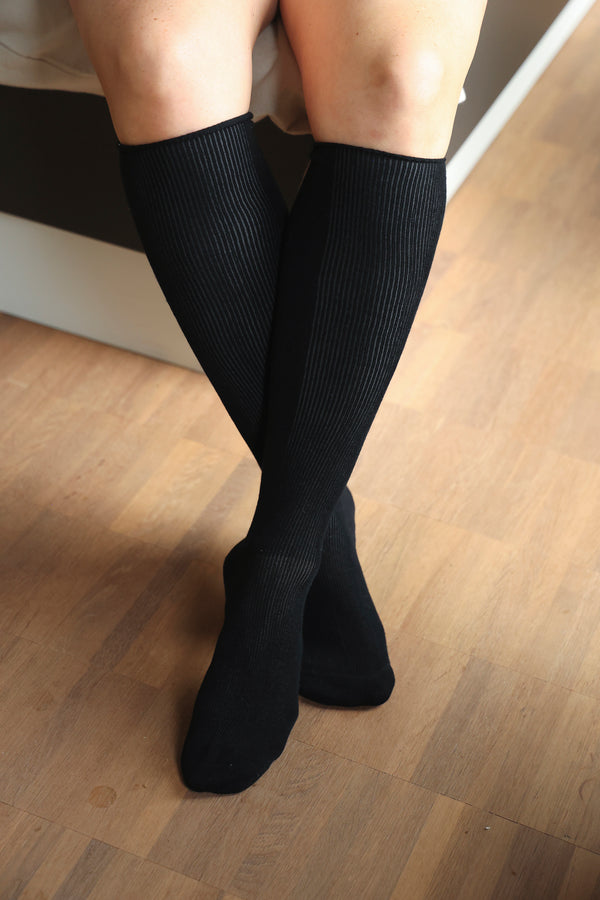
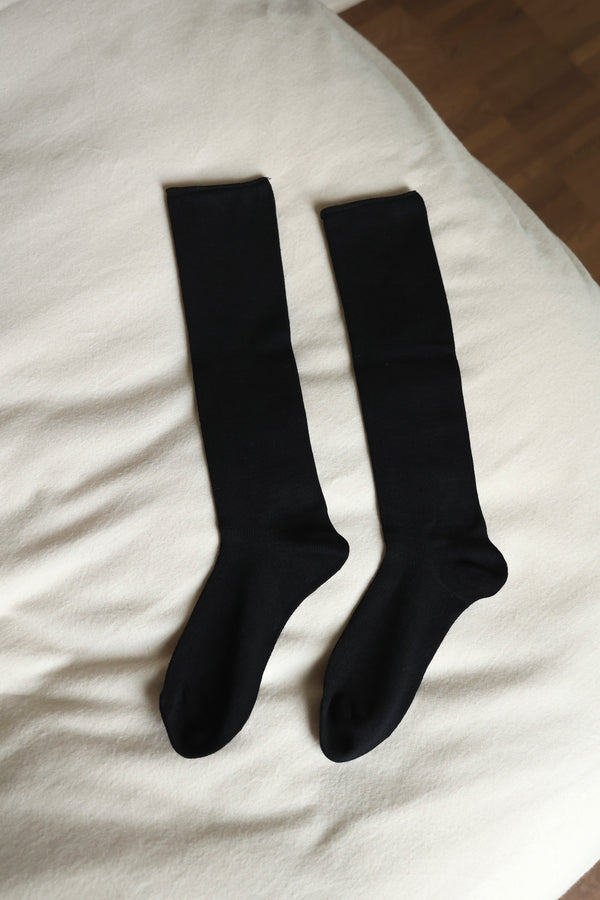
Blusss knee-high socks are made from soft bamboo, without a toe seam and without a tight ribbed cuff, so they leave no marks on the legs.
They come in sizes 27–46, for kids, teens and adults. For toddlers with smaller feet, ask your orthotist about suitable options. Browse our seamless knee-high socks, and always check with your orthotist which sock thickness suits the brace.
Key takeaways
- A thin, seamless knee-high sock protects the skin under an AFO or leg brace.
- Toe seams, wrinkles and tight cuffs are the main causes of red marks.
- Your orthotist can advise on the right sock thickness for the brace.
FAQ
What socks should you wear under an AFO?
A thin, seamless knee-high sock that covers the whole brace area and does not squeeze at the top. It protects the skin from rubbing without adding pressure.
Should the sock be higher than the brace?
Yes, ideally the sock reaches at least as high as the brace, so the edge of the brace never rests on bare skin.
Can a regular knee sock be worn with an AFO?
It can, but regular knee socks often have a toe seam and a tight ribbed cuff. Inside a brace, both can press into the skin for hours.
How do I prevent red marks under a leg brace?
Choose a seamless sock without a tight cuff, smooth out wrinkles before putting the brace on, and check the skin afterwards. Marks that do not fade should be discussed with your orthotist.
Are bamboo socks good for wearing under a brace?
Bamboo feels smooth and soft, and helps regulate warmth and moisture. That makes it a comfortable choice for skin that stays covered by a brace all day.
What sock size does my child need with an AFO?
Go by your child's shoe size without the brace, not by age. A sock that is too big wrinkles inside the brace; a sock that is too small squeezes the toes.