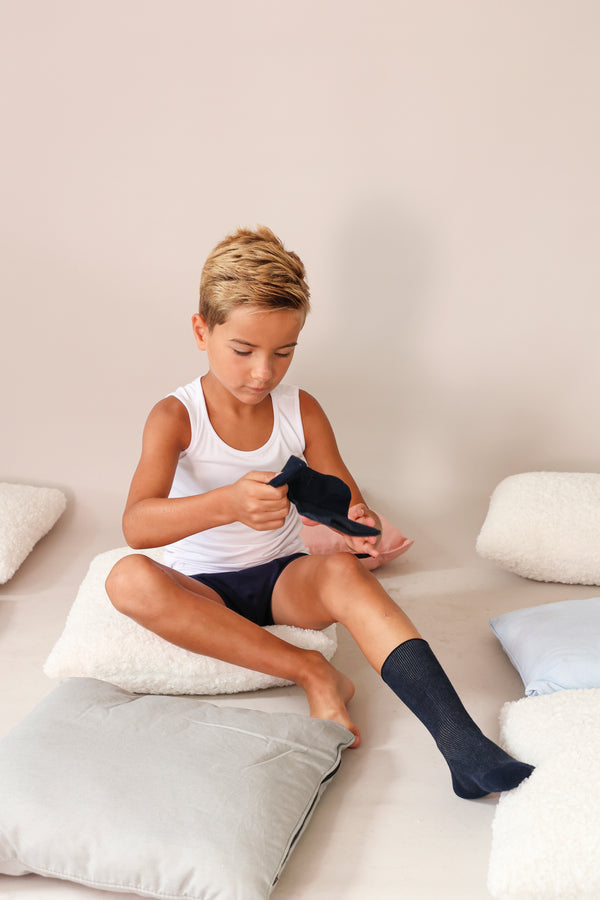
Sensory-Sensitive Children: A Complete Clothing Guide

For a sensory-sensitive child, getting dressed can be one of the hardest parts of the day. A label at the neck, a seam across the toes or a stiff waistband isn't a small annoyance — it can feel genuinely unbearable, because their nervous system registers touch more intensely than other people's. Clothing can't change that wiring, but it can stop adding to it. The right clothes quietly remove a constant source of irritation, so a child starts the day with a lower sensory load and more room before they reach their limit. This guide explains what makes clothing work for sensory-sensitive children, why it matters so much, and what to look for, garment by garment.
What is a sensory-sensitive child?
A sensory-sensitive child experiences ordinary input — the feel of fabric, a tag, a tight cuff — more strongly than most, so things others barely notice can feel scratchy, painful or overwhelming. This heightened response to touch is common in children who are highly sensitive, autistic, have ADHD or sensory processing differences, and it's why clothing so often becomes a daily battleground. It isn't fussiness or defiance; it's a real difference in how the nervous system handles everyday sensation.
A sensory-sensitive child: a child whose nervous system responds more intensely to everyday sensory input — touch, texture, pressure, temperature — so that a seam, label or tight band that others don't notice can feel irritating, distracting or even painful. Soft, seam-free, non-binding clothing removes those triggers, lowering the daily sensory load rather than treating any underlying condition.
Why clothing matters so much for sensitive children
Clothing touches the skin all day, so for a child who feels touch intensely it's a near-constant input — one they can't switch off. The American Academy of Pediatrics highlights that children with sensory processing differences can be strongly affected by everyday sensations, and that lowering unnecessary input helps them stay regulated. A scratchy jumper or a digging waistband becomes background stress that drains the energy a child needs for school, play and friendships. Swap it for something soft and seam-free and you remove one trigger entirely. To be clear, this is about comfort, not treatment — the right clothes make the day easier, but they aren't a therapy and don't replace professional support.

What to look for, garment by garment
The same few principles apply to almost everything in a sensitive child's wardrobe.
- Tops and tees: seam-free or flat-seam, tag-free, in a fine, soft fibre like bamboo. Watch for raised prints inside the neck.
- Socks: seamless at the toe, with a soft, non-gripping cuff — the toe seam is the single most common trigger.
- Trousers and leggings: a soft, wide, non-binding waistband instead of tight elastic, with smooth inner seams.
- Underwear: seam-free and tag-free, in a soft knit, so nothing digs in under other layers.
- Layers: light and breathable, so a child can adjust to temperature without overheating, which can itself feel overwhelming.
Across all of them, the things to avoid are the same: scratchy or hairy fabrics, stiff labels, hard seams, tight elastic and anything that grips or itches.
It's not just fabric — it's seams, tags and fit
Even the softest fabric still bothers a sensitive child if there's a hard seam or a stiff label against the skin. Soft fabric works best alongside seam-free, tag-free construction and a non-binding fit. If socks are your daily flashpoint, our guide to what to do when a child refuses to wear socks goes deeper, and our guide to fabrics that don't itch compares the gentlest options.
Blusss clothing for sensitive children
Blusss is built around fine, soft fibres and seam-free, tag-free finishing, designed with and for sensitive kids. The kids' AIR FLOW bamboo tee is smooth, breathable and label-free, and the kids' seamless bamboo socks remove the toe seam that trips so many children up. Across the kids' range the principle is the same: nothing that scratches, digs in or grips. After years of designing this way, the feedback we hear most from parents is simply that a softer, seam-free wardrobe turns the morning from a battle into something calmer. Blusss makes everyday sensory-friendly clothing, not medical garments, and it isn't a treatment — if your child's sensitivity is affecting daily life, a paediatrician or occupational therapist is the right person to talk to.
FAQ
What is a sensory-sensitive child?
A child whose nervous system responds more intensely to everyday input like touch, texture and pressure, so a seam, label or tight band that others don't notice can feel irritating or even painful. It's common in highly sensitive, autistic and ADHD children.
Why does my child say clothes hurt?
Because heightened touch sensitivity can make ordinary seams, tags and fabrics feel genuinely uncomfortable. It's not defiance — switching to soft, seam-free, tag-free clothing removes the trigger for many children.
What fabrics are best for sensitive children?
Fine, smooth, breathable fibres like bamboo viscose, modal and soft organic cotton tend to feel kindest. Avoid coarse wool, stiff polyester and anything with a scratchy finish.
How can I make getting dressed easier?
Choose seam-free, tag-free, non-binding clothes, pre-wash new items to soften them, lay outfits out the night before, and give your child small choices so they feel some control.
Are sensory-friendly clothes only for autistic children?
No. They help any child who feels touch intensely — including highly sensitive and gifted children, those with ADHD, and children with sensitive skin.
Can the right clothing treat my child's sensitivity?
No. It can lower the daily sensory load, which many children find calming, but it doesn't treat the underlying sensitivity. For concerns about daily functioning, speak to a professional.
Key takeaways
- Sensory-sensitive children feel touch more intensely, so seams, tags and tight bands can be genuinely painful — not fussiness.
- Soft, seam-free, tag-free, non-binding clothing removes a constant trigger and lowers the daily sensory load.
- The same principles apply garment by garment: fine soft fibres, smooth seams, soft waistbands, no stiff labels.
- Socks (the toe seam) are the most common flashpoint.
- It's about comfort, not treatment — speak to a professional about daily functioning.