Autism and Clothing for Adult Men: Dressing Without the Daily Sensory Battle

For many autistic men, getting dressed is not a quick, automatic act. It is a daily negotiation with fabric. A seam in the wrong place, a label at the neck, a waistband that grips, or a fabric that feels just slightly wrong can sit in your awareness for hours, quietly draining energy you would rather spend elsewhere. This isn't fussiness; it is how a sensitive nervous system processes touch. The good news is that clothing is one of the easiest sensory inputs to change. Here is why ordinary clothing is so often a struggle for autistic men, and what actually makes getting dressed calmer.
Why is clothing such a common struggle for autistic men?
Clothing is a common struggle because autism often comes with heightened sensory sensitivity, and clothing touches the skin constantly, all day. For many autistic men, touch that others filter out — a seam, a tag, a stiff waistband — stays in the foreground and keeps demanding attention. Over hours, that steady stream of input can build into sensory overload, leaving you tense, distracted or exhausted for reasons that are invisible to everyone else. It is not about being difficult; it is a real, physical response to constant input.
What is sensory overload? Sensory overload happens when the brain receives more sensory input — touch, sound, light — than it can comfortably process at once. For many autistic people, a scratchy label or a tight waistband isn't a minor annoyance; it is constant input that builds through the day and drains energy, focus and patience. Removing that input is one of the simplest ways to lower the load.
Why does ordinary clothing cause sensory overload?
Ordinary clothing causes overload through a handful of repeat offenders: raised seams that rub, stitched-in labels that scratch, tight waistbands and cuffs that press, and stiff or synthetic fabrics that feel rough or trap heat. Each one might seem small, but they don't switch off — they send the same signal again and again, all day. On top of the texture itself, the chemistry of the fabric matters: DermNet notes that the dyes and finishing chemicals in clothing are a common cause of skin reactions, which adds another layer of discomfort on already sensitive skin. Soft, low-finish natural fabrics remove much of that.
What clothing features actually help autistic adult men?
The features that help are the ones that remove input: softness, seamlessness, no labels and a gentle fit. Use this as a simple checklist:
- Seamless or flat-seam construction, so nothing rubs at the shoulders, sides, groin or feet.
- No stitched-in labels — printed or tagless designs instead of scratchy tags at the neck or waist.
- Soft, breathable fabric such as bamboo or organic cotton, with a consistent, predictable texture.
- A relaxed, non-binding fit, with soft waistbands and cuffs that hold without gripping.
- The same trusted pieces in multiples, so getting dressed needs no decisions and brings no surprises.
- Predictable, familiar fabrics — once you find one that works, sticking with it removes the guesswork.
- Fragrance-free washing with no fabric softener, so the feel and smell stay the same wash after wash.
Building a wardrobe you don't have to think about
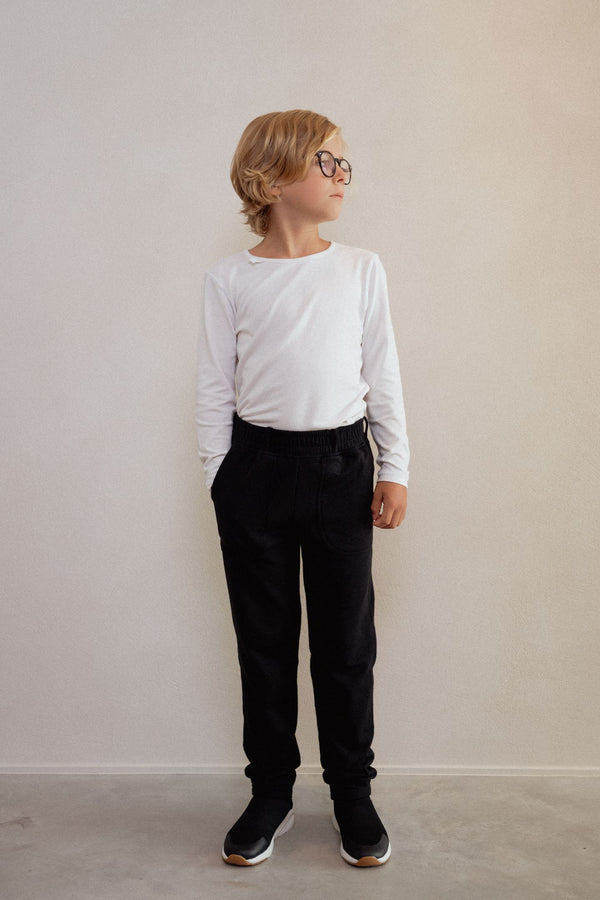
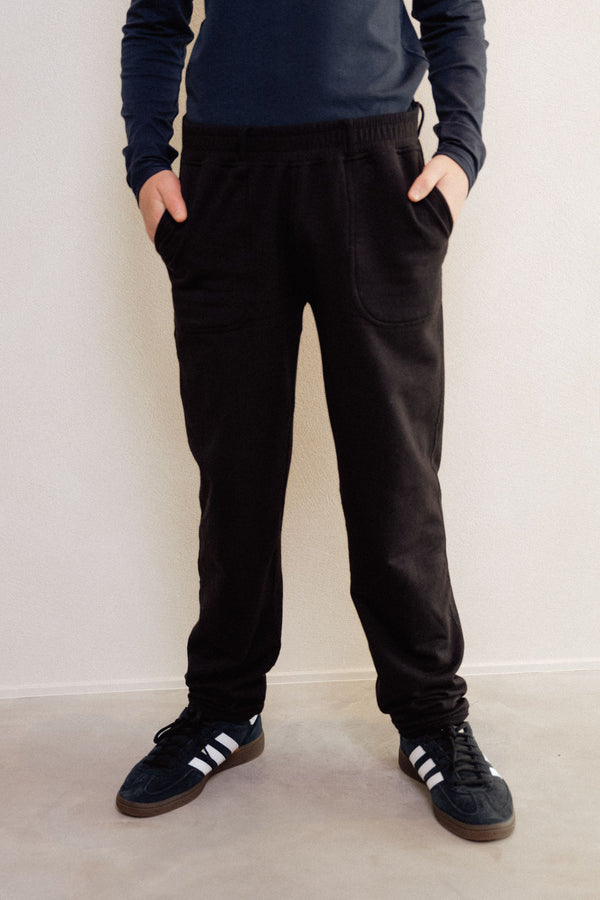
The aim is a wardrobe that asks nothing of you — clothing you put on and then forget. That usually means a few soft, seamless staples worn on repeat: a seam-free t-shirt as a base layer, soft trousers with a non-binding waistband instead of stiff jeans, and seamless socks that don't bunch or press. Buying the pieces that work in multiples removes daily decisions and the risk of an unexpected, wrong-feeling garment. Our men's guide to sensory-friendly clothing for men walks through the whole wardrobe, and our guide to which fabrics don't itch helps you choose textures you can trust.


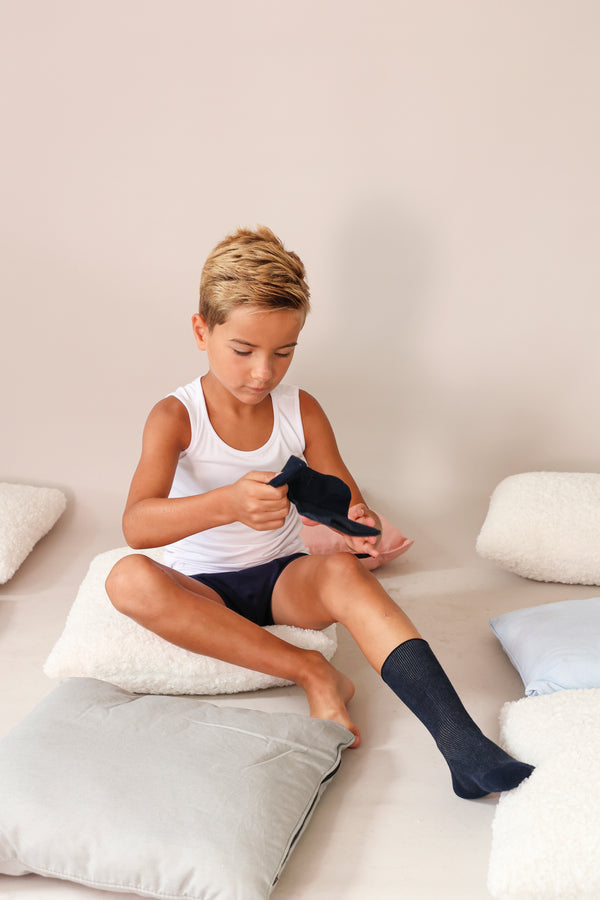
Underwear and socks deserve the same care, since they sit in the most sensitive spots. Seamless socks that don't bunch and soft, tagless underwear remove two more constant inputs — our guide to seamless underwear and undershirts for men covers that in detail.

Clothing, masking and energy
For many autistic men, pushing through clothing discomfort is a form of masking — quietly tolerating input the nervous system is actually struggling with. It looks like coping, but it has a cost: the energy spent ignoring an itchy collar or a tight waistband is energy not available for work, conversation or rest. Autistic men often tell us that switching to soft, seamless clothing freed up a surprising amount of mental space, simply because one constant source of low-level stress was gone. Removing the discomfort isn't a luxury; it is one less thing to manage. For the broader picture, our guide to soft clothing for adults with autism goes deeper.
Small changes, big difference
You don't need to overhaul everything at once. Often one soft, seamless base layer is enough to feel the difference on day one — and from there you can replace the pieces that bother you most, one at a time.
At Blusss we design soft, seamless, low-stimulus clothing for exactly this — clothing that stays quiet so your day can be louder in the ways you choose. You can explore our skin- and sensory-friendly clothing and start with one piece. Our overview of how sensory-friendly clothing helps with skin problems explains how it all fits together.
FAQ
Why do autistic men struggle with clothing?
Autism often comes with heightened sensory sensitivity, and clothing touches the skin all day. Seams, labels and tight waistbands that others filter out can stay in the foreground and build into sensory overload.
What clothing is best for autistic adult men?
Soft, seamless, tagless clothing in breathable fabric like bamboo or organic cotton, with a relaxed, non-binding fit. Predictable, familiar textures help most.
What fabrics are best for autistic men?
Soft, breathable natural fibres like bamboo and organic cotton, because they feel smooth and consistent and rarely prickle or trap heat.
Is it normal for clothing to feel painful or overwhelming?
For many autistic people, yes. A sensitive nervous system can experience ordinary textures as genuinely uncomfortable or even painful. It is a real sensory response, not fussiness.
Does sensory-friendly clothing only suit autistic people?
No. The same soft, seamless, label-free features help anyone with sensitive skin or sensory sensitivity, but they are especially valuable for autistic adults.
How do I make getting dressed easier?
Find a few soft, seamless pieces that work, buy them in multiples, and wear them on repeat. Removing labels, choosing non-binding waistbands and sticking to trusted fabrics all reduce the daily load.
Key takeaways
- For many autistic men, clothing is a constant sensory input that can build into overload, draining energy and focus through the day.
- The clothing that helps removes that input: soft, seamless, tagless pieces in predictable, breathable fabric with a non-binding fit.
- Small changes work — one soft base layer, trusted pieces bought in multiples and worn on repeat — so getting dressed asks less of you.