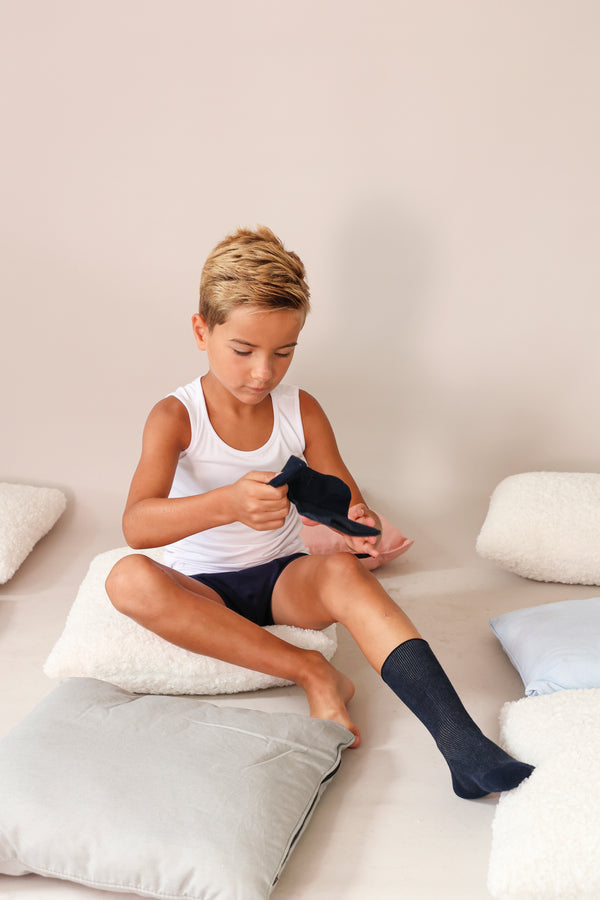
Clothing for Highly Sensitive Children: Practical Guidance for Everyday Comfort

Clothing for highly sensitive children plays a key role in reducing daily sensory stress. Irritating fabrics, seams, or labels can make getting dressed overwhelming and affect a child’s mood and focus all day.
This article explains why clothing for highly sensitive children matters so much and how parents can make thoughtful, practical choices that support comfort, focus, and emotional balance throughout the day.
What Does it Mean When a Child is Highly Sensitive?
Highly sensitive children process sensory input more intensely than others. This includes sound, light, smells, and especially physical touch. Clothing is in constant contact with the body, which makes texture, fit, and finishing details particularly important.
Common signs of sensory sensitivity related to clothing include:
-
Strong reactions to seams, labels, or tight waistbands
-
Distress when trying new clothes or changing outfits
-
Preference for very soft, familiar garments
-
Emotional outbursts linked to physical discomfort
Sensory sensitivity is not the same as autism or ADHD, although they can overlap. With highly sensitive children, the main challenge around clothing is tactile input and comfort, not behaviour or attention alone. Acknowledging this sensitivity helps children feel understood rather than “difficult”.
Why Clothing for Highly Sensitive Children Affects Daily Wellbeing
Clothing for highly sensitive children is about more than appearance or trends. When garments cause irritation, the body stays in a mild stress response all day. This can affect mood, concentration, and confidence, especially at school or during social activities.
Small details often make the biggest difference:
-
A scratchy label can distract for hours
-
A thick sock seam can make it hard to focus
-
Tight cuffs or waistbands can feel restrictive
Occupational therapists regularly highlight that comfortable clothing reduces sensory overload and supports emotional regulation. When children feel physically at ease, they have more energy for learning, play, and connection.
The Best Materials for Clothing for Highly Sensitive Children
Which fabrics feel safest on sensitive skin?
Natural, breathable fabrics are usually the most comfortable choice for sensitive children. These materials move with the body and feel softer against the skin.
Recommended fabrics include:
-
Organic cotton: soft, breathable, and widely tolerated
-
Bamboo: naturally smooth, temperature-regulating, and gentle
-
Modal: lightweight, flexible, and low-friction
Many families find that synthetic fabrics, rough wool, or stiff blends increase discomfort. Certifications such as GOTS can also provide reassurance about fabric quality and skin safety.

Fit and Finishing Details that Reduce Sensory Overload
Even the softest fabric can feel uncomfortable if the fit or finishing is wrong. Clothing for highly sensitive children works best when it removes unnecessary pressure points.
Look for:
-
Flat or seamless construction
-
No inside labels (information printed directly on fabric)
-
Loose, flexible fits rather than tight silhouettes
-
Soft waistbands and wide neck openings
It often helps to let children try new clothes at home first. Wearing them for a short, calm activity can reveal whether a garment truly feels comfortable.
Practical Steps for Choosing Clothing for Highly Sensitive Children
Choosing the right clothing for highly sensitive children often involves trial and observation. These steps can make the process calmer and more predictable.
1. Observe patterns
Notice when discomfort appears. Is it specific fabrics, certain fits, or particular times of day?
2. Involve your child
Let your child touch fabrics, try options, and explain what feels right or wrong. Offering limited choices builds confidence without overwhelm.
3. Test before committing
Have your child wear new clothing at home first. Comfort over time matters more than first impressions.
4. Wash before wearing
Always wash new garments using a mild detergent. Avoid fabric softeners, which can leave residues on sensitive skin.
5. Use soft layers
A gentle base layer under sweaters or jackets can prevent irritation and help with temperature regulation.
Common Mistakes Parents Make with Sensitive Clothing Choices
Even well-intentioned choices can cause discomfort. Frequent pitfalls include:
-
Prioritising style over comfort
-
Ignoring seams, labels, or elastic pressure
-
Switching brands too quickly without testing
-
Not allowing the child to participate in decisions
Avoiding these mistakes often leads to calmer mornings and fewer clothing-related conflicts.
In short:
Clothing for highly sensitive children directly affects comfort, mood, and daily functioning.
Soft fabrics, thoughtful fit, and sensory-friendly finishes reduce overstimulation.
Comfortable clothing supports calmer routines and greater confidence.
FAQ
Why does my child refuse clothing even when it looks soft and comfortable?
Some garments feel different once worn for longer periods. For children with tactile sensitivity, small details like seams or fabric movement can become overwhelming over time.
How can I choose clothing for highly sensitive children without daily stress?
Start with trusted fabrics and repeat styles that already work. Consistency helps reduce anxiety and decision fatigue.
Does seamless clothing help with sensory sensitivity?
Yes. Seamless or flat-seam designs remove common pressure points that cause irritation and distraction for sensitive children.
What if my child rejects all new clothing options?
Introduce new clothing gradually and without pressure. Wearing it briefly at home can help build tolerance and positive associations.
If you want to explore sensory-friendly options designed with these principles in mind, the Blusss children’s clothing collection offers calm designs focused on comfort and everyday ease.