Soft Clothing for Children with Autism: a Calm, Practical Guide for Daily Comfort

Soft clothing for children with autism can significantly reduce daily stress around dressing, both at home and at school. Many autistic children experience sensory sensitivity, which means seams, labels, or rough fabrics can feel overwhelming or even painful. This article explains how soft clothing supports comfort and regulation, and how to choose the right options for your child.
Why Soft Clothing for Children with Autism Matters
For many families, mornings start with tension around getting dressed. A shirt that feels “normal” to one child can feel unbearable to another. In autistic children, sensory information from touch is often processed more intensely. Clothing seams, tight waistbands, or scratchy labels can quickly lead to overload.
Research and clinical practice in occupational therapy show that sensory sensitivities are common in autism. Tactile discomfort can trigger stress responses such as refusing clothes, crying, or difficulty focusing once at school. Soft clothing for children with autism helps reduce these triggers by creating a sense of physical safety and predictability.
When clothing feels comfortable, children often have more mental space for learning, playing, and social interaction. Parents frequently notice calmer mornings and smoother transitions during the day. Comfort is not a luxury here—it is a foundation for emotional regulation.
Key Features of Sensory-Friendly Clothing
Not all “comfortable” clothing is truly sensory-friendly. Soft clothing for children with autism usually shares a few essential characteristics.
Soft, breathable materials
Natural and semi-natural fabrics such as cotton, bamboo, and modal are commonly well tolerated. They feel smooth against the skin, regulate temperature, and reduce the risk of itching caused by sweat or friction.
Seamless or flat-seam design
Seams are one of the most common problem areas. Sensory-friendly garments often use flat seams or seamless construction to prevent rubbing, especially around the shoulders, sides, and waistband.
No labels or tags
Neck labels are a frequent source of irritation. Many sensory-friendly clothes use printed labels instead of sewn-in tags.
Flexible fit and stretch
Clothing should move with the body without squeezing. Gentle stretch fabrics allow freedom of movement and reduce constant awareness of the garment.
Calm colours and simple designs
Busy prints or high-contrast patterns can be visually overstimulating for some children. Neutral colours and simple designs often feel more soothing.
Skin-conscious production
Some children have sensitive skin alongside sensory sensitivity. Hypoallergenic dyes and careful finishing help prevent irritation.
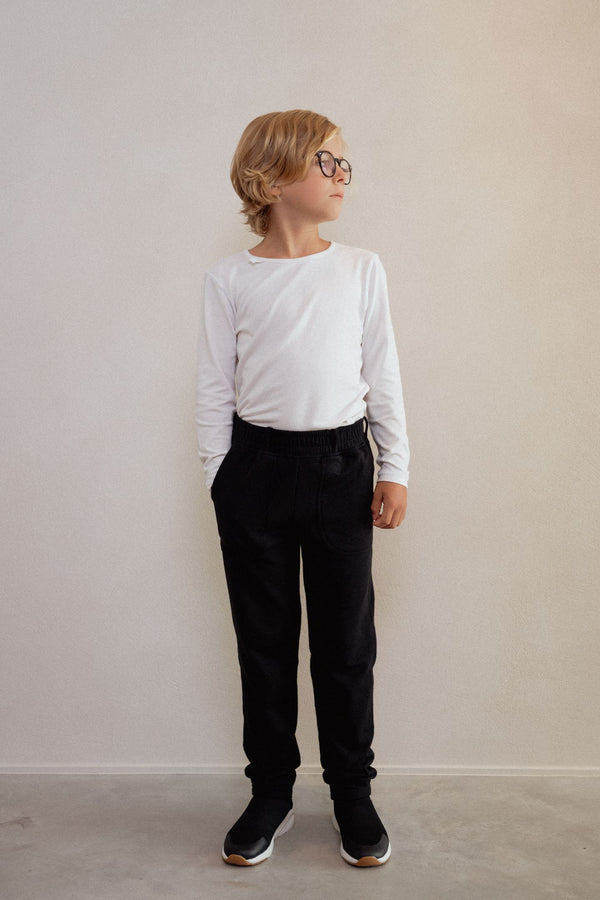
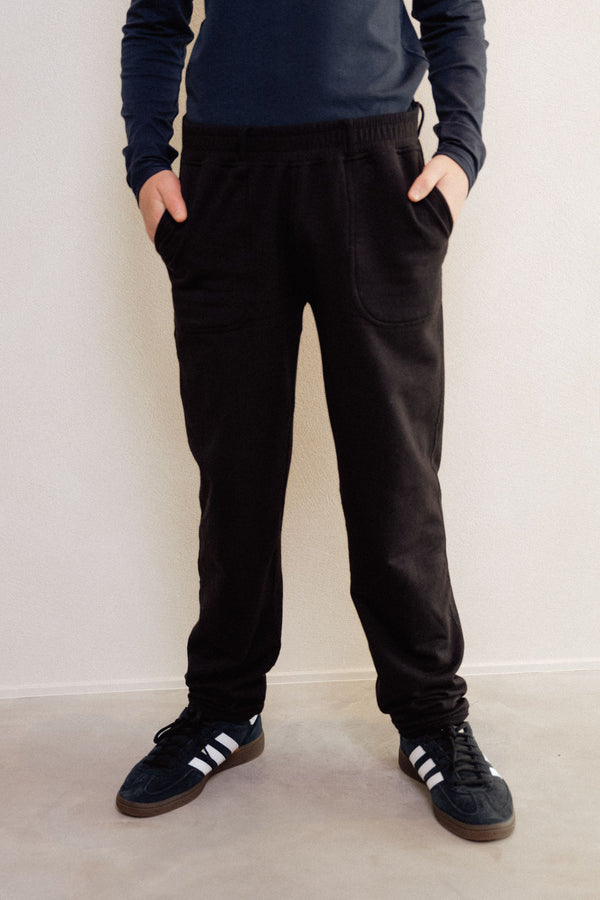
A comparison helps: a standard T-shirt often has thick seams and a stiff neckline, while sensory-friendly shirts—such as those in the Blusss sensory-friendly children’s clothing collection—are designed to feel barely noticeable on the body.
How to Choose Soft Clothing for your Child
Choosing soft clothing for children with autism is usually a process of observation and trial. Every child’s sensory profile is different.
Start by observing reactions
Notice when your child becomes uncomfortable. Common signals include pulling at collars, scratching seams, or wanting to remove clothes quickly.
Pay attention to:
-
Specific seam areas (neck, sides, waistband)
-
Labels or tags
-
Certain fabrics (wool, synthetics, or blends)
-
Fit preferences (loose versus close-fitting)
Test materials gradually
Introduce one new item at a time. Washing new clothing before wearing can make fabrics softer and remove production residues.
Involve your child when possible
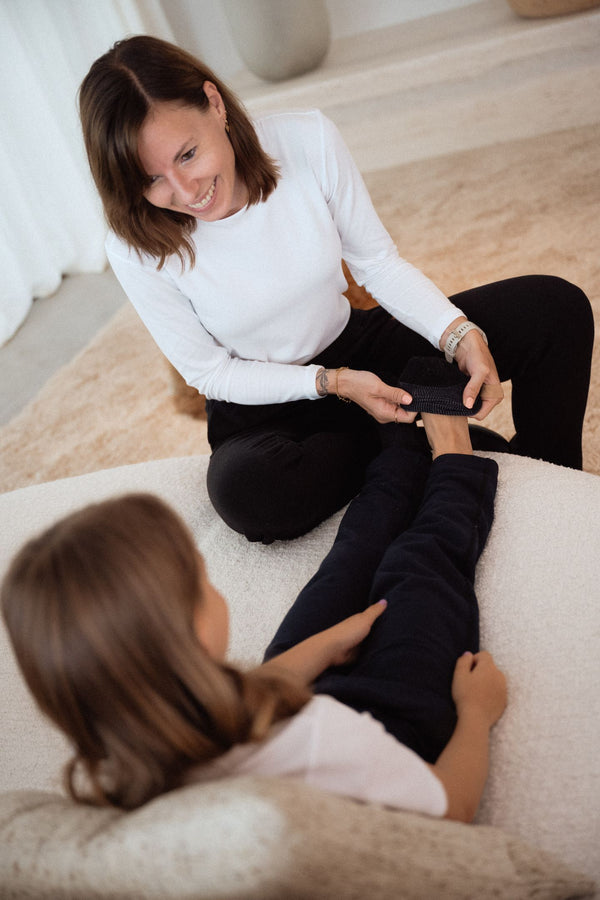
Letting your child touch fabrics or choose between two options can increase acceptance and give a sense of control.
Use layers strategically
A seamless base layer under other clothing can reduce friction, especially in colder months or with school uniforms.

Soft Clothing at School and in Daily Routines
School environments can amplify sensory stress. Clothing that feels uncomfortable can make it harder for a child to concentrate or participate.
If a uniform is required, consider:
-
A seamless undershirt beneath the uniform
-
Softer socks without tight elastic
-
Discussing small accommodations with the school
Combining soft clothing for children with autism with other sensory supports—such as quiet spaces or noise-reducing headphones—can further support regulation throughout the day.
FAQ
Why does my child refuse clothes with seams or labels?
Seams and labels can create constant tactile input. For autistic children, this input may feel intense and distracting, making it hard to ignore throughout the day.
How can I choose soft clothing for children with autism that works long-term?
Look for durable fabrics that stay soft after repeated washing. Check regularly for wear that could create rough edges or stiffness over time.
What if my child is sensitive to almost all fabrics?
Try introducing very soft materials like bamboo or modal and allow short wear periods at first. Occupational therapists can also help identify specific tactile sensitivities.
Does soft clothing for children with autism also help with school focus?
Comfortable clothing can reduce background stress, which may support better focus and participation. It does not change learning abilities, but it can remove unnecessary barriers.
In Short:
Soft clothing for children with autism reduces sensory stress caused by seams, labels, and rough fabrics.
Comfortable materials support calmer mornings and better daily regulation.
Thoughtful clothing choices create a stable base for learning and wellbeing.
A Calm Next Step
If clothing is a daily source of stress, exploring the Blusss sensory-friendly clothing range can be a practical next step to support your child’s comfort.