Clothing for Eczema: A practical guide to comfortable, skin-friendly choices

Living with eczema can make something as simple as getting dressed uncomfortable. The wrong fabric, a rough seam or a tight waistband can trigger itching and redness within minutes. Choosing the right clothing will not cure eczema, but it removes one of the daily triggers you actually have control over.
This guide explains why clothing affects eczema, which fabrics suit sensitive skin, what to avoid, and how washing habits change the result. It covers children and adults, and it covers nights as well as days.
Why clothing can trigger eczema irritation
Eczema, also known as atopic dermatitis, weakens the skin's natural protective barrier. When that barrier is compromised, skin becomes more reactive to heat, moisture and friction.
Because of that sensitivity, small details make a large difference. The usual culprits:
- rough seams rubbing against the skin
- tags and labels causing constant itching
- tight elastics creating pressure points
- synthetic fabrics trapping heat and sweat
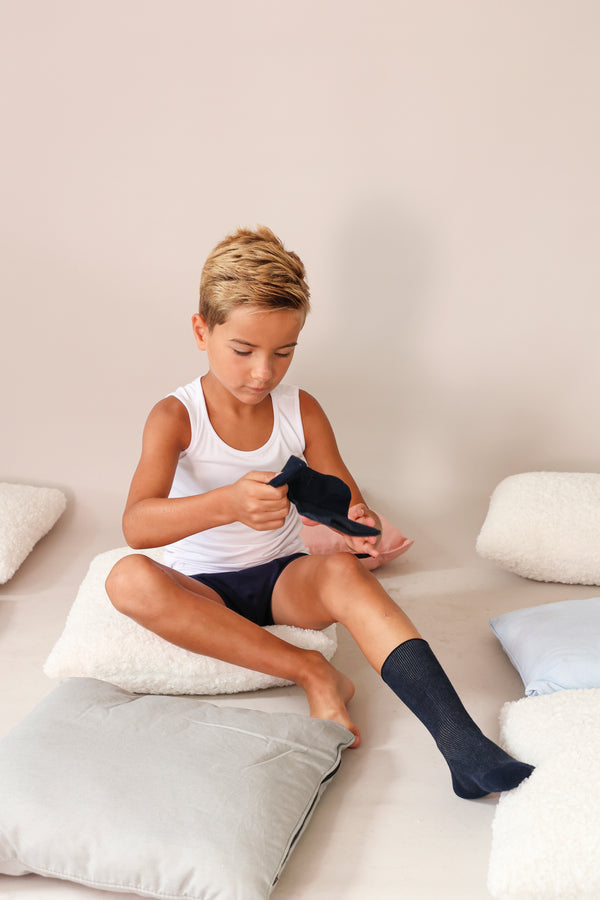
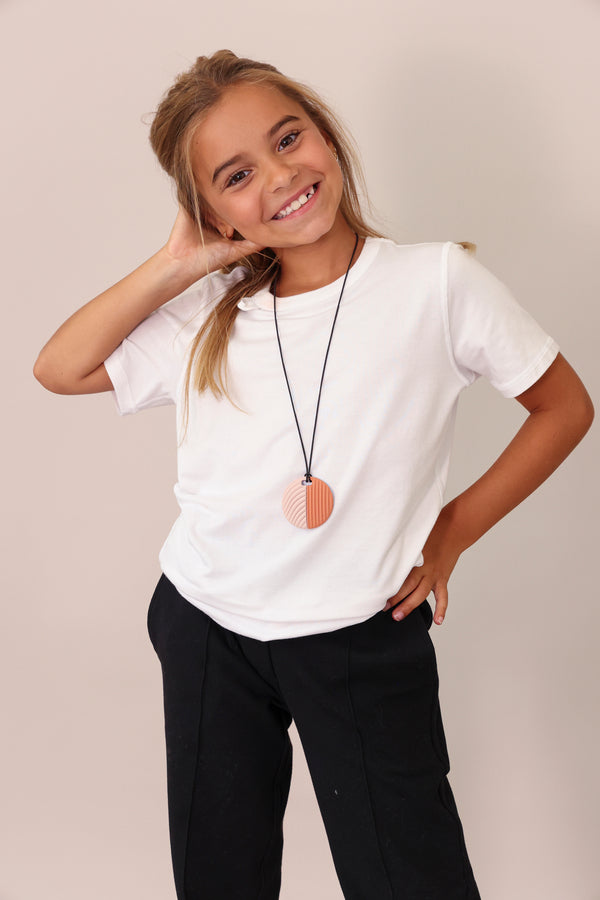
Children often notice this more strongly. School uniforms, sportswear and socks with thick toe seams cause irritation that continues all day, in a setting where changing is not an option.
The National Eczema Association notes that reducing friction and choosing appropriate fabrics can help manage symptoms and support skin comfort.
Why eczema makes skin more sensitive
Healthy skin acts as a barrier that locks moisture in and keeps irritants out. In eczema that barrier does not function as well, so the skin loses moisture faster, nerve endings become more reactive, and heat and friction trigger stronger responses.
That is why fabrics that normally feel soft can still irritate. It is rarely the fabric alone. It is the fabric plus a seam, plus warmth, plus a full day of movement.
Best fabrics for eczema-friendly clothing
Most people with eczema do best in soft, breathable fabrics that regulate temperature and reduce friction.
Cotton
One of the most widely recommended fabrics for sensitive skin: soft, highly breathable and low risk for irritation. Organic cotton is worth the premium because it is less likely to carry chemical residues from processing.
Bamboo
Bamboo viscose has become popular in eczema-friendly clothing for three reasons: very smooth fibres, good moisture absorption and natural temperature regulation. All three reduce the heat and friction that commonly set off a flare.
Silk
Silk creates a very smooth surface that glides over skin rather than dragging on it, which helps with friction, rough seams and tight clothing. Some dermatologists suggest silk sleepwear or underwear for people who itch at night.
Further information on skin-friendly fabrics is available from the American Academy of Dermatology.

Fabrics that may worsen eczema symptoms
Wool
Warm, but wool fibres feel prickly and create friction against reactive skin. Merino is gentler than coarse wool, though it still suits some people and not others.
Synthetics
Polyester, nylon and elastane-heavy blends trap heat, hold sweat against the skin and increase itching. A small percentage of elastane for stretch is usually fine; a fabric that is mostly synthetic is not.
Chemically treated fabrics
Heavy dyes, fragrance finishes and wrinkle-resistant treatments trigger reactions in some people. Darker dyes and "easy care" finishes are the ones to watch.
Eczema at night: why the itch gets worse after dark
Many people with eczema find the evening is the hardest part of the day. There are physiological reasons for that. Skin loses more water overnight, body temperature rises slightly before sleep, and there are fewer distractions competing for attention, so the itch takes centre stage.
Scratching during sleep is largely involuntary, and waking to open scratches is a common experience rather than a personal failure.
Clothing plays a real part here:
- Choose loose, breathable nightwear. Anything that traps warmth increases the itch.
- Long sleeves and long legs put a soft layer between fingernails and skin.
- Avoid elasticated cuffs and waistbands, which leave marks over eight hours of stillness.
- Keep the bedroom cool. Temperature matters more at night than during the day.
- Wash bedding with the same fragrance-free detergent as your clothes. Your face spends the night on a pillowcase.
If sleep is being disrupted regularly, that is worth raising with your doctor or dermatologist rather than managing alone. Poor sleep worsens eczema, and worse eczema disturbs sleep, and the loop is difficult to break from the clothing side only.
Adults with eczema: the part nobody designs for
Eczema is often treated as a childhood condition. Many adults live with it continuously, and some develop it for the first time in their thirties or forties. The clothing problem does not go away with age. It changes shape.
Adults face a constraint children do not: work clothing. Stiff collars, waistbands, synthetic office wear and a full day with no option to change. Nobody is going to accommodate a flare at two in the afternoon.
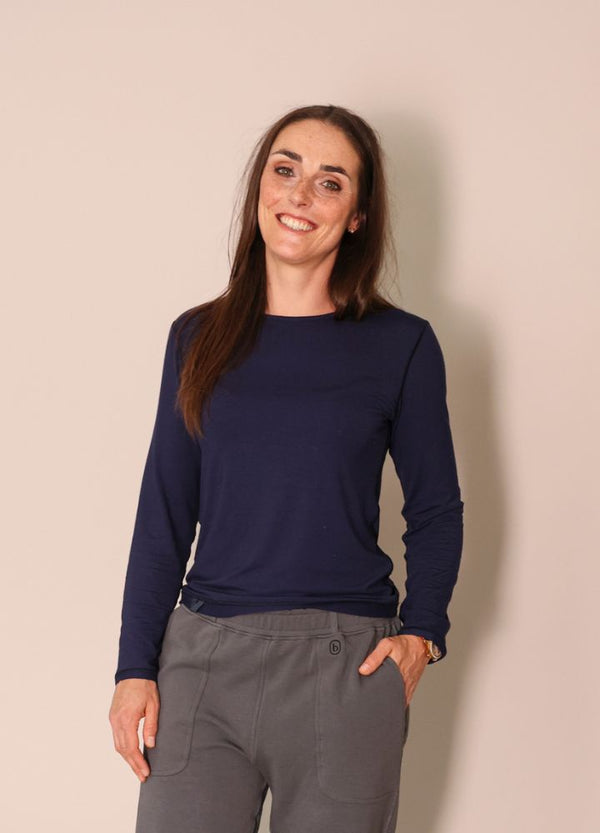
The practical answer is to start with the base layer rather than the outfit. Seamless underwear, soft socks without a toe seam, and a cotton or bamboo t-shirt underneath do more for the day than anything worn on top. What touches the skin decides how the day goes; what people see does not.
Adult sizes in genuinely seam-free clothing are harder to find than children's, because most of the market was built for parents. That is changing, but it is worth checking that a garment described as sensory-friendly is actually made in adult sizes and cut, rather than a scaled-up children's design.
How clothing design affects comfort
Fabric matters, but construction matters just as much. The usual irritants are thick seams, rough stitching, tight cuffs and waistbands, and internal labels.
Clothing built to avoid these is usually called sensory-friendly, and typically means flat or reversed seams, printed rather than sewn-in labels, soft materials and a relaxed fit. Those four features reduce both pressure and friction, which are the two mechanical triggers you can actually design out.
Practical tips for choosing clothing for eczema
- Choose breathable fabrics. Cotton, bamboo or silk. They allow air circulation and prevent overheating.
- Check seams and labels. Turn the garment inside out before buying and avoid thick seams, stiff stitching and sewn-in labels.
- Choose a loose fit. Tight clothing increases friction and traps heat.
- Wash before first wear. New garments carry finishing chemicals from manufacturing.
- Buy one before you buy five. Skin is individual. What works for one person with eczema fails for another.
How washing affects eczema
Laundry habits influence comfort as much as fabric choice. Use a fragrance-free detergent, skip fabric softener entirely, run an extra rinse cycle, and air-dry where possible. Each step reduces the detergent residue that sits on fabric and against skin.
Fabric softener deserves a specific mention. It works by leaving a coating on the fibres, which is precisely what reactive skin does not need, and it reduces the breathability of cotton over time.
Frequently asked questions
Why does clothing trigger eczema flare-ups?
Clothing triggers eczema when fabric traps heat, creates friction or carries irritating chemicals. Rough seams, synthetic materials and tight garments worsen itching and redness. Soft, breathable fabrics are usually more comfortable.
What fabrics are best for eczema?
Cotton, bamboo and silk are the most commonly recommended. They are breathable, smooth and less likely to trap moisture than synthetics.
What should I wear to sleep with eczema?
Loose, breathable nightwear with long sleeves and legs, without elasticated cuffs, in cotton, bamboo or silk. A cool bedroom matters as much as the garment.
Do adults get eczema too?
Yes. Many people carry it from childhood and some develop it as adults. The clothing challenges shift towards work wear, where changing during the day is not an option.
Can children with eczema struggle with regular clothing?
Yes. School uniforms, sportswear and socks with thick seams cause irritation that continues all day. Clothing designed for sensitive skin reduces that.
Does sensory-friendly clothing help with eczema?
Sensory-friendly clothing uses soft fabrics, minimal seams and relaxed fits. Those features reduce friction and pressure on reactive skin, which supports daily comfort. It is not a treatment and does not replace medical care.
Should I avoid fabric softener?
Most people with eczema do better without it. Softener leaves a coating on the fibres and reduces breathability, and the fragrance is a common irritant.
Key takeaways
- Fabric is only half the answer. Seams, labels and fit account for as much irritation as the material itself.
- Nights need their own plan: loose, long, breathable, and a cool room.
- Start with the base layer. What touches the skin decides the day.
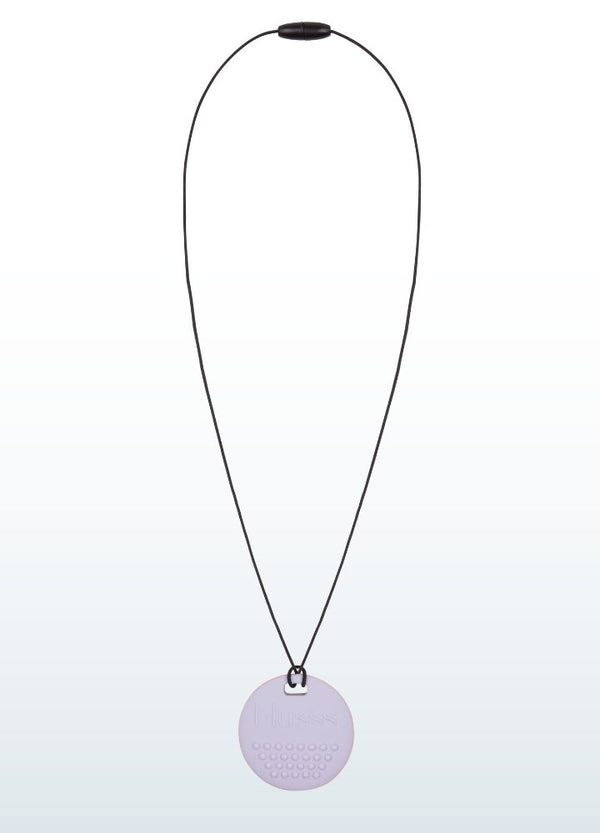
If ordinary clothing causes irritation, sensory-friendly garments can make a real difference. Blusss designs clothing that reduces friction, avoids irritating seams and leaves out labels entirely, for children and adults.
Browse everything made for reactive skin in the skin sensory friendly collection, or start with the layer that matters most and read the guide to seamless socks.