Seamless Socks for Adults: Why the Toe Seam Ruins Your Day

Most people never think about the seam across the toes of their socks. If you are reading this, you are not most people. That ridge sits directly on the most sensitive part of the foot, moves every time you walk, and presses harder inside a shoe. For some, it is a minor annoyance. For others, it decides whether the day starts well or badly. This guide explains what makes a sock truly seamless, why the toe is the problem, and what to check before buying.
What are seamless socks?
Seamless socks are knitted so that the toe closure creates little or no raised ridge inside the sock. Ordinary socks are closed with a stitched seam across the toes, which leaves a bump that rubs against the skin with every step.
Seamless socks, defined: socks knitted so that the toe closure is flat or absent, removing the ridge that ordinary socks have across the toes. They are worn by people with tactile sensitivity, autism, ADHD or sensory processing differences, by people with eczema, neuropathy or chronic pain, and by anyone who simply cannot ignore the feeling of a seam against their toes.
Why the toe seam is the problem
The toes have one of the highest densities of touch receptors in the body. A seam there is not a small detail in a small place. It is a raised object pressed against a highly sensitive area, held there by a shoe, for as long as you are wearing them.
Three things make it worse through the day. The foot swells slightly, so the pressure increases. The foot warms and sweats, so friction increases. And the sock shifts, so the ridge moves across the same spot repeatedly rather than settling in one place.
That is why the complaint is almost never “my socks felt bad this morning”. It is “by lunchtime I wanted them off”.
Truly seamless, hand-linked or flat seam: what is the difference?
Three different things are sold under similar words, and the difference matters more than the price.
| Type | How the toe is closed | What you feel |
|---|---|---|
| Truly seamless | Knitted closed, no stitched join | Nothing. This is the goal. |
| Hand-linked | Stitches joined one by one, very flat | A faint line. Acceptable for many, not for everyone. |
| Flat seam | A normal seam, pressed flatter | Still a ridge. Often sold as sensory friendly. |
“Flat seam” is the one to watch. It is a genuine improvement over a standard sock and it is not the same as seamless, but it is frequently marketed as though it were. If a sock is described as flat-seam rather than seamless, assume you will still feel something.
It is not only a sensory issue
Seamless socks are often filed under products for autistic children. The adults buying them have a wider range of reasons.
- Tactile sensitivity, autism, ADHD or sensory processing differences
- Eczema, psoriasis or reactive skin, where friction can irritate
- Diabetes or peripheral neuropathy, where sensation in the feet can be reduced
- Fibromyalgia, chronic pain or allodynia, where ordinary pressure registers as pain
- Long days standing, walking or travelling
If you have diabetes or reduced sensation in your feet, seam and fit are worth discussing with your doctor or podiatrist alongside your usual foot checks. Comfortable socks are a comfort choice, not a treatment.
Five things to check before buying
- The toe. Turn the sock inside out and feel across the toes. If you can find a ridge with your fingers, you will find it with your foot.
- The cuff. A tight elastic band leaves marks and adds pressure at the ankle. Look for a soft, wide cuff that holds without gripping.
- The fibre. Bamboo and cotton stay softer and breathe better than synthetic blends. Warm feet mean more friction.
- Loose threads inside. Some socks are seamless at the toe but leave thread ends inside the foot. Check.
- How it washes. A sock that is soft in the packet and stiff after four washes has not solved anything.
Bamboo or cotton?
Both work. Bamboo viscose is slightly smoother and manages moisture a little better, which matters on long days and for warm feet. Cotton is more familiar, sturdier and usually cheaper. For reactive skin, either is a large improvement over polyester. Our full bamboo vs cotton comparison goes deeper.
What matters more than the fibre debate is the toe construction. A cotton seamless sock beats a bamboo sock with a seam every time.
Where to start
You do not need to replace every pair at once. Buy one pair, wear it on an ordinary day, and see whether you stop thinking about your feet. That is the only test that counts.
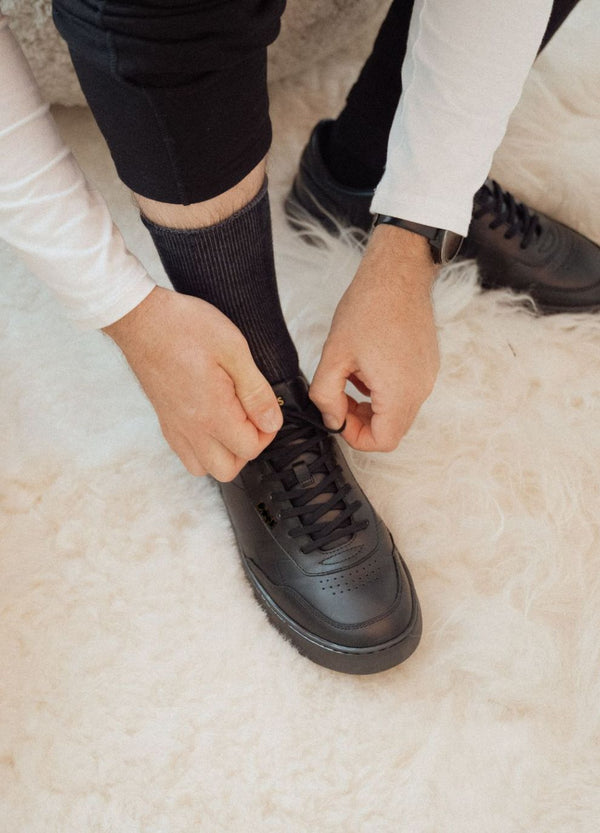
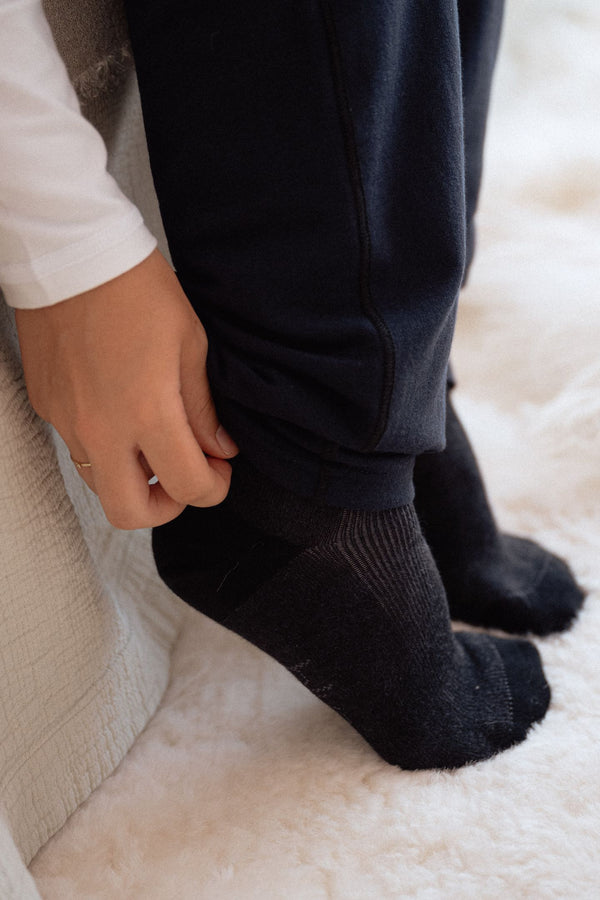
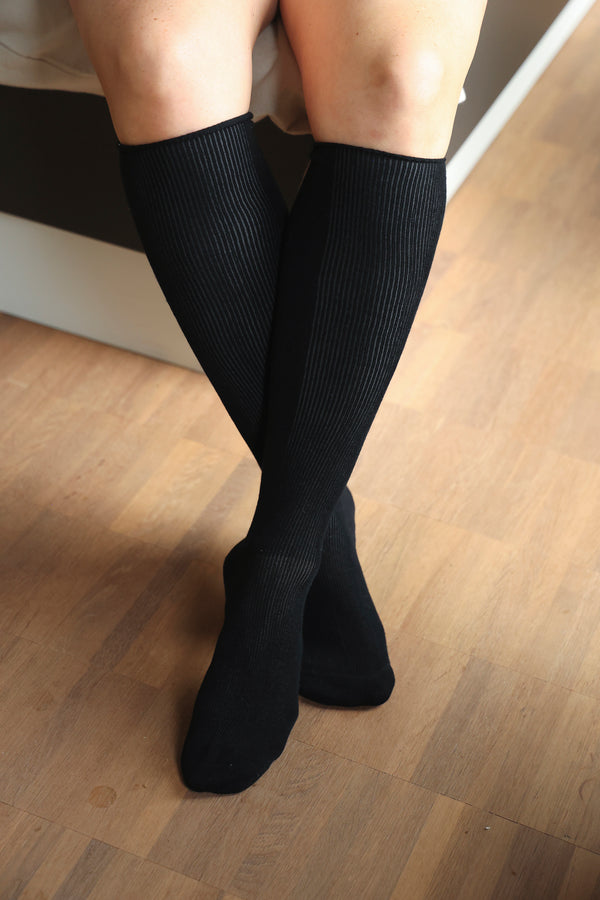
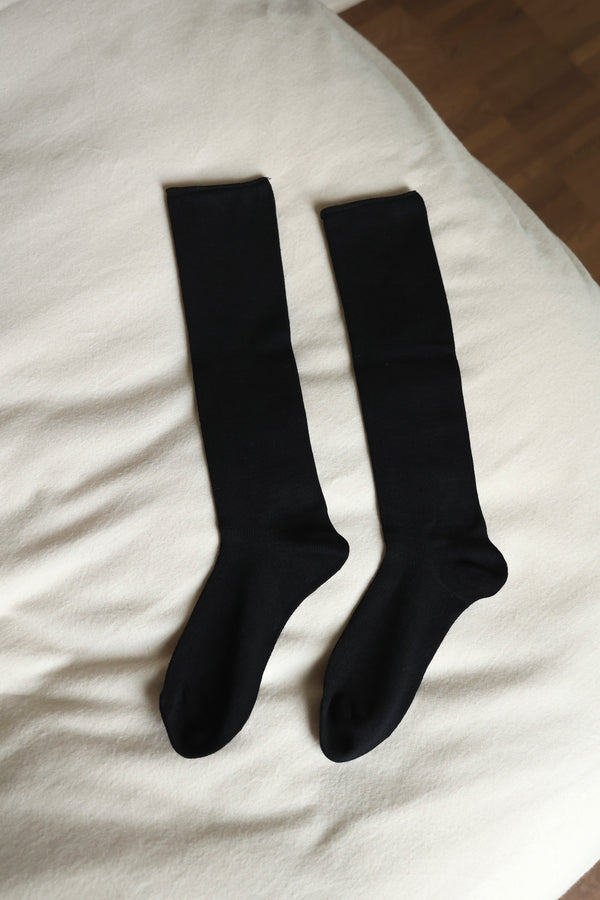
The Blusss seamless bamboo socks are knitted closed at the toe, with a soft cuff and no loose threads inside, in adult sizes. The full range, including knee-high and several colours, is in the seamless socks collection. If seams bother you on your feet, they probably bother you elsewhere too, which is what the guide to seamless joggers covers.
Frequently asked questions
What are seamless socks?
Socks knitted so the toe closure leaves little or no raised ridge inside. Ordinary socks are stitched shut across the toes, leaving a bump that rubs with every step.
Are seamless socks only for children?
No. Most seamless socks are marketed for children, but adults buy them for sensory sensitivity, eczema, neuropathy, chronic pain and long days on their feet.
Is a flat seam the same as seamless?
No. A flat seam is a normal seam pressed flatter. It is better than a standard sock but you can usually still feel it. Truly seamless means no stitched join at all.
Are bamboo or cotton socks better for sensitive skin?
Both are good. Bamboo is slightly smoother and handles moisture a little better; cotton is sturdier and usually cheaper. Either beats polyester for reactive skin.
Do seamless socks help with diabetes?
Reducing friction and pressure is part of general foot comfort when sensation is reduced. Seamless socks with a non-binding cuff are a comfortable choice, but they are not a treatment, so keep your usual foot checks and speak to your doctor or podiatrist.
Why do my socks feel fine in the morning and awful by afternoon?
Feet swell and warm up through the day, which increases both pressure and friction on the same spot. A seam that was tolerable at eight is not at three.
How should seamless socks fit?
Close enough not to bunch, loose enough not to mark the ankle. Bunching creates folds under the foot, which causes the same problem the seam did.
Key takeaways
- The toe seam is the problem, not the sock. It sits on the most touch-sensitive part of the foot and gets worse as the day goes on.
- Seamless, hand-linked and flat seam are three different things. Only one of them removes the ridge completely.
- Turn the sock inside out before you buy. Your fingers will tell you what your feet would have found out by lunchtime.