Eczema and Socks: Why Seamless Bamboo Socks Are a Game-Changer for Sensitive Skin

The wrong sock can trigger an eczema flare-up
If you live with eczema, you already know: the skin doesn't forgive rough textures. A scratchy seam at the toe. A synthetic blend that traps heat. An elastic that digs in. These aren't small inconveniences, they're real triggers that can set off hours of itching, redness and discomfort.
The good news? The right sock can make an enormous difference. In this guide, we explain exactly what to look for in socks for eczema-prone skin and why seamless bamboo socks consistently come out on top.
What is eczema, and why does clothing matter so much?
Eczema (atopic dermatitis) is a chronic inflammatory skin condition where the skin barrier is compromised, making it reactive to friction, heat, sweat and synthetic materials. The feet are particularly vulnerable: enclosed in shoes all day, prone to sweating, and in constant contact with sock fabric.
Definition: Eczema & clothing
Eczema (atopic dermatitis) is a condition in which the skin barrier function is weakened, causing the skin to react more intensely to external triggers — including friction from seams, heat trapped by synthetic fibers, and pressure from tight elastics. Choosing the right clothing and socks is a recognised part of eczema management, recommended by dermatologists and allergy specialists worldwide.
Dermatologists consistently recommend that people with eczema choose clothing made from natural, breathable fibers — and avoid anything with rough seams, dyes, or synthetic blends. The same logic applies to socks, perhaps even more so, because feet are one of the most common sites for eczema flare-ups in both adults and children.
Want to understand more about how skin sensitivity works? Read our guide on what sensory sensitivity really means and how it overlaps with eczema.
5 sock features that make eczema worse and what to choose instead
Not all socks are created equal when it comes to sensitive, eczema-prone skin. Here's what to avoid — and what to look for instead:
- Toe seams — The raised seam running across the toes is one of the most common eczema irritants. Constant friction against already-sensitive skin causes rubbing, redness and itching. Choose: seamless construction or flat-knit seams.
- Synthetic fibers (polyester, nylon) — Synthetics trap heat and moisture, creating the warm, damp environment that eczema flares in. Choose: natural fibers like bamboo or organic cotton.
- Tight elastics — A constricting cuff digs into inflamed skin and restricts circulation. Choose: a soft, non-constricting cuff that stays up without pressure.
- Harsh dyes and chemical finishes — Many mass-market socks are treated with dyes, softeners or antimicrobial chemicals that irritate sensitised skin. Choose: undyed or low-dye options made to skin-safe standards.
- Wool — Even natural wool can cause itching for eczema skin, because of the coarser fiber diameter. Choose: bamboo, which is naturally ultra-fine and smooth.
Why bamboo is the best material for eczema socks
Bamboo fiber stands out from other natural materials for one key reason: its fiber diameter is exceptionally fine — finer than merino wool, and far smoother than standard cotton. That means less friction against the skin, less irritation, and a softer feel that eczema-prone skin can actually tolerate.
Here's what makes bamboo particularly suited to eczema management:
- Naturally hypoallergenic — no chemical treatments needed to achieve softness
- Moisture-wicking — draws sweat away from the skin, keeping it drier and cooler
- Temperature-regulating — prevents the heat build-up that triggers eczema flares
- Smooth fiber structure — no rough protrusions that scratch sensitised skin
- Naturally antibacterial — reduces the bacterial load that can worsen eczema symptoms
Dermatologists and allergy specialists increasingly recommend bamboo-based textiles for patients with atopic dermatitis, alongside standard medical treatment. It won't replace your prescribed creams — but the right fabric can meaningfully reduce daily friction and irritation.

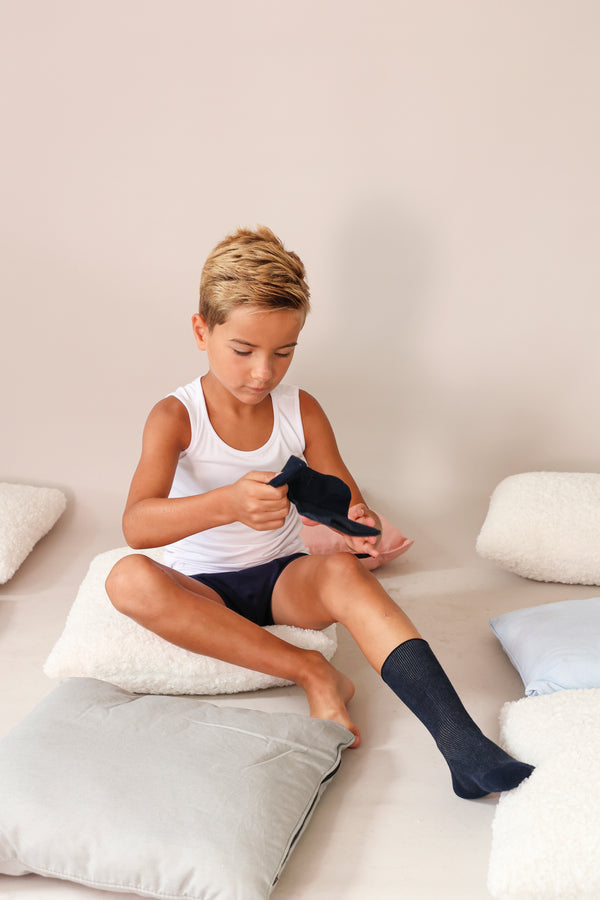
The Bamboo Sens socks by Blusss combine all of these properties: seamless construction, ultra-soft bamboo fiber, a non-constricting cuff, and no harsh dye treatments. Many customers with eczema describe them as the first socks they've worn in years that don't cause irritation by lunchtime.
Also available for children: the Kids' Bamboo Sens socks — made with the same seamless, soft-first approach for smaller, equally sensitive feet.
How to choose the right socks for eczema: a simple checklist
Use this checklist when choosing socks for yourself or your child with eczema-prone skin:
- Seamless or flat-knit toe construction — no raised seam across the toes
- Natural fiber: bamboo or organic cotton — avoid polyester, nylon, acrylic
- Soft, non-constricting cuff — stays up without digging into the skin
- Moisture-wicking properties — keeps feet dry throughout the day
- No harsh dyes or chemical finishes — look for skin-safe certifications (Oeko-Tex)
- Temperature-regulating — prevents heat build-up that triggers flares
Explore our full range of socks and clothing designed for sensitive skin in the Skin Sensory Friendly collection.
Eczema socks for children: what parents and dermatologists say
Children with eczema often struggle more than adults to communicate what's causing discomfort. Many parents notice their child pulling at socks, refusing to wear shoes, or scratching their feet without being able to explain why. Dermatologists and occupational therapists who work with children with atopic dermatitis consistently point to socks as one of the first things to change.
The approach is simple: remove known irritants first. Seamless, natural-fiber socks are usually the first recommendation before any other intervention. For children who also have sensory sensitivities (common in kids with eczema, autism, SPD or ADHD), seamless bamboo socks do double duty: reducing both skin irritation and sensory discomfort.
Read more: What is sensory-friendly clothing and why it matters for children with eczema and sensory sensitivities.
Frequently asked questions about socks and eczema
What are the best socks for eczema?
The best socks for eczema are seamless, made from natural fibers like bamboo, and have a soft non-constricting cuff. Bamboo is preferred over cotton for its finer fiber, moisture-wicking properties and natural hypoallergenic qualities. Avoid socks with toe seams, synthetic blends or tight elastics.
Can socks cause eczema flare-ups?
Yes. Socks made from synthetic fibers, with raised toe seams or tight elastics are common triggers for eczema flare-ups on the feet and ankles. Heat and moisture trapped by non-breathable fabrics further irritate already-sensitive skin.
Are bamboo socks good for eczema?
Yes. Bamboo fiber is naturally hypoallergenic, ultra-fine, moisture-wicking and temperature-regulating — all properties that benefit eczema-prone skin. Bamboo socks without seams and with a soft cuff are consistently recommended for people with atopic dermatitis.
Are Blusss bamboo socks suitable for eczema?
Yes. The Bamboo Sens socks by Blusss are seamless, made from ultra-soft bamboo fiber, and have a non-constricting cuff. They contain no harsh dyes or synthetic irritants, and are popular with adults and children who have eczema, sensitive skin and sensory sensitivities.
What socks should children with eczema wear?
Children with eczema should wear seamless socks made from natural fibers such as bamboo or organic cotton. Avoid socks with raised toe seams, tight elastics or synthetic blends. Dermatologists and occupational therapists typically recommend seamless, natural-fiber socks as the first step in reducing foot eczema irritation in children.
Can I wash bamboo socks normally?
Yes. Blusss bamboo socks can be washed in a regular machine wash on a gentle cycle at 30–40°C. Avoid fabric softeners, as these can leave residue that irritates sensitive skin.
Do seamless socks really make a difference for eczema?
Yes — for many people, removing the toe seam alone significantly reduces daily foot irritation. The seam is a constant friction point against skin that's already compromised. Seamless construction eliminates that contact point entirely.
Key takeaways: Socks are a real eczema trigger — seams, synthetics and tight elastics all irritate compromised skin. Seamless bamboo socks are the best choice for eczema-prone skin: hypoallergenic, moisture-wicking, temperature-regulating and friction-free. The Bamboo Sens socks by Blusss are designed specifically for sensitive and eczema-prone skin — for both adults and children.