Bamboo vs Cotton Socks: Which Is Better for Sensitive Skin?

The sock drawer problem nobody talks about
You have a drawer full of socks. And yet, morning after morning, nothing feels right. Too scratchy. Too tight at the ankle. A seam that digs in just wrong enough to ruin the whole day before it starts.
If this sounds familiar — whether for yourself or your child — you are not imagining it. For people with sensitive skin, sensory sensitivities, eczema, or conditions like autism, ADHD or SPD, the fabric of a sock matters enormously. One of the most common questions we hear is: what are the best socks for sensitive skin — bamboo or cotton?
This guide answers that question clearly, so you can make a confident choice. One thing up front: this is a comfort guide. Blusss socks are everyday sensory-friendly socks, not medical devices, so for any skin or foot condition, follow the advice of your doctor.
What makes a sock sensory-friendly? A sensory-friendly sock is designed to reduce common tactile triggers — raised toe seams, tight cuffs, rough fibres and bunching fabric. The socks people find kindest to sensitive skin are seamless or flat-seamed, made from fine, soft fibres, breathable, and gentle at the ankle. Both bamboo and cotton can qualify, but how they are made and what they are blended with makes a significant difference.
Bamboo vs cotton: the key differences at a glance
Bamboo viscose and cotton are both used in quality socks, but they behave quite differently on sensitive skin — especially when worn all day. (Bamboo viscose is made by processing bamboo pulp into a fine fibre, so it is a regenerated fibre rather than a raw natural one.)
| Feature | Bamboo viscose | Cotton |
|---|---|---|
| Softness | Exceptionally smooth, fine fibre | Soft, but varies by grade |
| Breathability | High — wicks moisture actively | Moderate — absorbs but can feel damp |
| Temperature | Feels cool and light in most conditions | Neutral — less adaptive |
| Feel on reactive skin | Smooth fibres, less friction | Generally gentle, but finishes and dyes can irritate |
| Durability after washing | Stays soft wash after wash | Can stiffen slightly over time |
| Good for sensitive skin | Yes — especially where softness matters most | Yes — combed cotton is a good option |
Why bamboo often wins for sensitive feet
Bamboo viscose is spun into an unusually fine, smooth fibre. That means less friction against sensitive skin and a consistently soft feel that does not rough up over time.
The moisture-wicking properties are also significant. Feet that stay dry tend to feel more comfortable, and less warm and damp inside a shoe. Bamboo pulls moisture away from the skin, which matters especially for children who run warm or adults who wear socks for long stretches.
What we hear most often from parents of sensory-sensitive children is that bamboo socks are the first pair their child will keep on without complaint. Tactile sensitivity to clothing textures is a well-documented challenge for people with sensory processing differences — the STAR Institute for Sensory Processing describes this in its overview of SPD — which is why fibre choice matters so much.
When cotton is still a good choice
Not all cotton socks are equal. Combed cotton — where short, rough fibres are removed during production — is noticeably softer than standard cotton and can work well for many people with mild sensitivities. It is also widely available and often more affordable.
For people without strong tactile sensitivities, a quality combed or organic cotton sock may be entirely sufficient. Cotton is also highly breathable and a familiar choice that works well in many everyday situations.
Where cotton tends to fall short is in situations where extra softness, moisture management and lasting comfort are essential — exactly the conditions that matter most for sensitive and sensory-sensitive skin.
The seam problem: more important than the fabric
Here is something many sock guides miss: the seam is often a bigger issue than the material.
A raised toe seam — the classic stitched line across the front of a sock — is one of the most common sensory triggers in children and adults alike. It creates a constant pressure point that, for someone with tactile sensitivity, can feel genuinely unbearable. Tugging, crying, refusing shoes — these reactions are not dramatic. They are a real response to a real physical irritant.
A checklist for choosing socks for sensitive and sensory-sensitive feet:
- Seamless construction or a flat, nearly invisible toe seam
- A fine, soft fibre — bamboo viscose or combed cotton
- A soft, non-digging cuff that stays up without pressure
- Moisture-wicking fabric to keep feet dry
- No labels or irritating inner tags
- A good fit — snug but never tight
- Fabric that stays soft after repeated washing
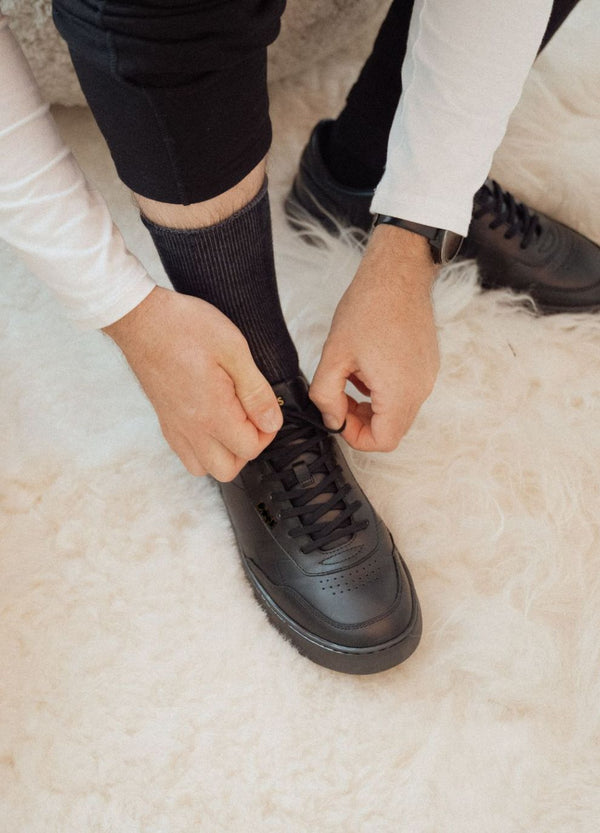
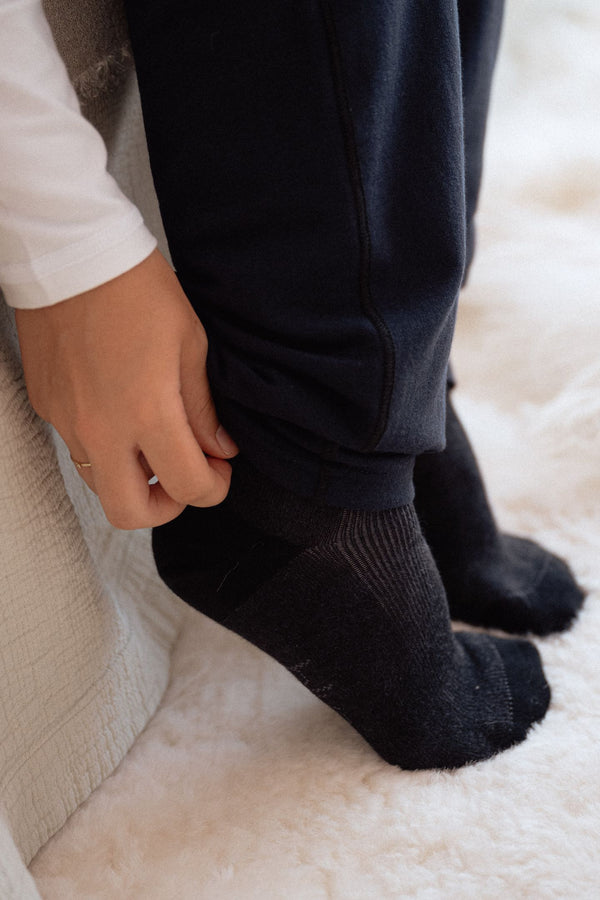
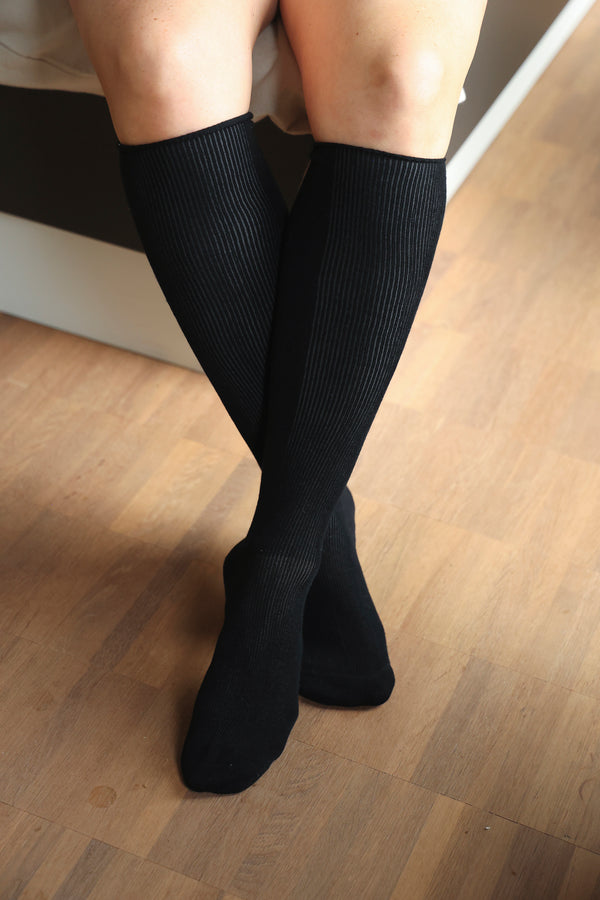
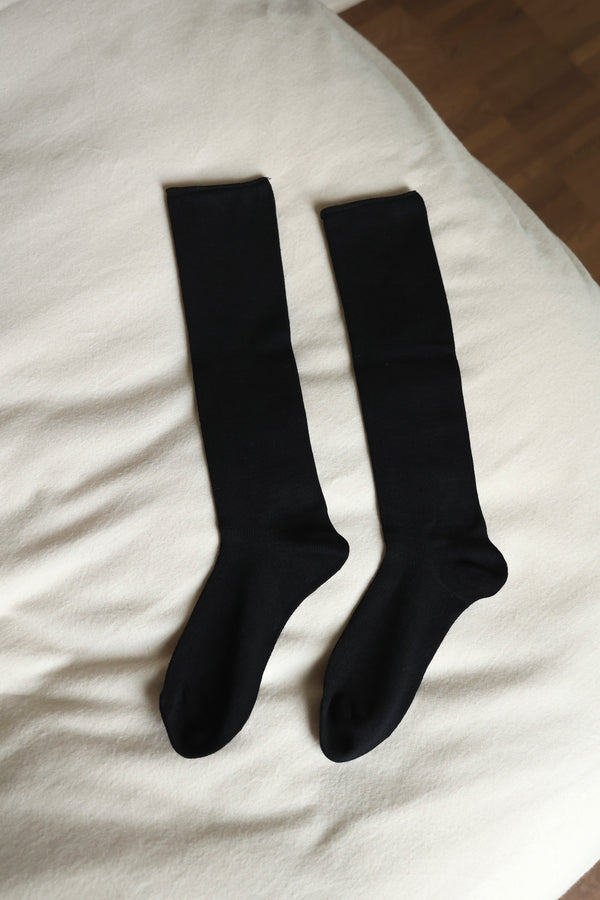
Blusss seamless bamboo socks are designed around every one of these criteria. They combine a truly seamless knit with soft bamboo viscose, a gentle non-constricting cuff, and no labels — for children and adults who feel everything a little more intensely.
Discover seamless bamboo socks for children and seamless bamboo socks for adults from Blusss.

Bamboo vs cotton for specific needs
Eczema-prone skin
Soft, breathable fabrics are generally the most comfortable choice when skin is reactive. The National Eczema Association suggests choosing smooth, breathable fabrics and avoiding materials that trap heat and moisture — guidance that fits well with a fine bamboo sock. It is also worth avoiding aggressive dyes and chemical finishes, and washing new socks before wearing. Comfortable socks are not a treatment for eczema; for flare-ups or persistent symptoms, speak to your doctor or dermatologist.
Autism and sensory processing differences
For people with autism or sensory processing differences, the tactile experience of clothing — including socks — can be significantly amplified. Seamless construction matters most here, but fibre softness is equally important. You can read more in our guide on autism clothing: practical ways to make everyday clothing more comfortable.
ADHD
Discomfort from clothing is a real source of distraction for many people with ADHD. A sock that bunches, pinches or scratches is not just annoying — it can pull attention away all day. Choosing socks that stay comfortable removes one source of sensory noise.
Diabetes and sensitive feet
Many people look for socks with a gentle, non-constricting cuff, moisture-wicking fabric and seamless construction, because those features simply feel more comfortable. These are comfort features, not medical ones. If you have diabetes, your healthcare team may give you specific advice about foot care and choosing socks and shoes, and that advice comes first — our guide to comfortable socks for diabetes and neuropathy goes into more detail.
Key takeaways
- The socks people find kindest to sensitive skin combine seamless construction with a fine, soft fibre — bamboo viscose is a strong choice for most people with sensory or skin sensitivities.
- Combed or organic cotton is a solid alternative for milder sensitivities, but may not offer the same level of tactile comfort as bamboo.
- The seam matters as much as the fabric: always look for seamless or flat-seamed construction.
- These are everyday comfort socks, not medical products — for any skin or foot condition, follow your doctor's advice.
FAQ
Are bamboo socks better than cotton for sensitive skin?
For most people with sensitive skin, bamboo viscose offers more softness, breathability and moisture management than standard cotton. The fine fibre stays soft after washing, which is why it is a popular choice for sensitive feet.
Do bamboo socks help with eczema?
Bamboo viscose is soft, breathable and moisture-wicking, which many people with eczema-prone skin find comfortable. Paired with seamless construction and a soft cuff, it removes some of the friction and dampness that can make socks uncomfortable. It is a comfort choice, not a treatment — speak to your doctor about eczema itself.
Are bamboo socks good for children with sensory sensitivities?
Many parents of children with autism, SPD or sensory sensitivity find bamboo socks among the most tolerated options. The soft fibre and seamless construction remove two of the most common sensory triggers: rough texture and raised toe seams.
What is the difference between bamboo and combed cotton socks?
Combed cotton is cotton that has had short, rough fibres removed, making it softer than standard cotton. Bamboo viscose is spun into a finer fibre with better moisture-wicking. Both are good options for sensitive skin, but bamboo tends to keep its softness longer.
Do bamboo socks stay soft after washing?
Yes. Bamboo viscose is durable and keeps its softness through repeated washing. Wash on a gentle cycle at 30–40 degrees and skip fabric softener, which can leave residue that irritates sensitive skin.
Which socks are best for autism?
Seamless socks made from fine, soft fibres — bamboo in particular — are a common choice for people with autism or sensory processing differences. Look for flat-knit or seamless toe construction, a gentle cuff, and no labels or internal tags.
Can adults with sensory sensitivity wear bamboo socks?
Yes. Sensory sensitivity affects people of all ages. Adults who find standard socks uncomfortable often find bamboo socks the most comfortable option for all-day wear.