Seamless Socks for Neuropathy and Sensitive Feet

For sensitive feet, the toe seam is usually the first thing you notice — that hard ridge across the toes that you can feel with every step inside a shoe. Take it away, and a sock suddenly feels calm. That is the whole idea behind a seamless sock, and it is why so many people with neuropathy or easily irritated feet look for one. This guide explains what makes a sock truly seamless, why it matters when feet are sensitive, and how the soft bamboo SENS socks from Blusss are built for exactly this kind of comfort. To be clear from the start: these are everyday sensory-friendly socks, not medical devices, so always follow the advice of your doctor or podiatrist.
Why do seamless socks matter for sensitive feet?
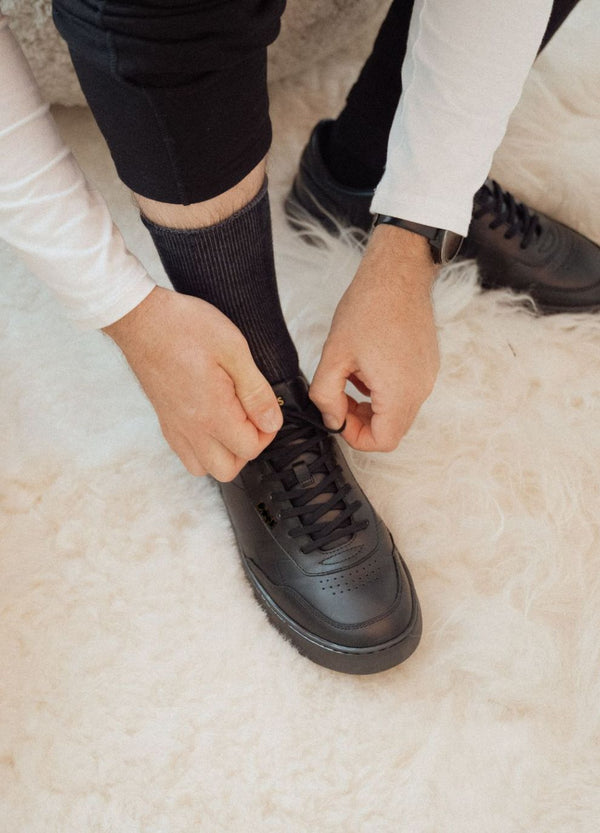
Seamless socks matter because they remove the single biggest irritation in an ordinary sock: the thick toe seam. In a standard sock, that seam forms a raised ridge that sits right across the tops of the toes, pressing and rubbing inside a shoe all day. A seam-free toe takes that ridge away completely, so there is nothing hard between your toes and the fabric. With no toe seam and a wide cuff, a sock like this is a comfortable choice for sensitive feet. These are comfort features, not medical functions, so pair them with the foot-care advice your healthcare team gives you.
Seamless (seam-free) sock: a sock knitted or hand-linked so the toe closes without a raised, stitched ridge. Instead of a bulky seam pressing across the toes, the inside stays smooth and flat. The result is a sock with no hard contact point at the toe — the part of the foot that notices a seam most.
What makes a sock genuinely seamless?
A genuinely seamless sock is finished at the toe so there is no ridge on the inside. Many socks are sewn shut with a thick seam that you can feel; a seam-free or hand-linked toe joins the knit flat instead, leaving the inside smooth. It is worth checking, because some socks are sold as comfortable but still have a noticeable seam. Turn the sock inside out and run a finger across the toe: if you feel a hard, raised line, sensitive feet will feel it too. A flat, smooth toe is what you are looking for.
Why seams bother neuropathic or sensitive feet more
Sensitive and neuropathic feet notice seams more because the foot is already dealing with extra signals — tingling, discomfort or reduced sensation. A hard ridge rubbing on the toes adds one more irritation on top. Where sensation is reduced, foot care is something to take seriously: the NHS has a clear overview of peripheral neuropathy and its symptoms, and your doctor or podiatrist can advise you on checking your feet and choosing footwear.

How to spot a genuinely seamless, comfortable sock
If you want a sock that stays comfortable all day, these are the things worth checking before you buy.
- Turn the sock inside out and feel the toe — it should be flat and smooth, with no hard ridge.
- Choose a soft, fine fibre like bamboo viscose that feels gentle rather than scratchy.
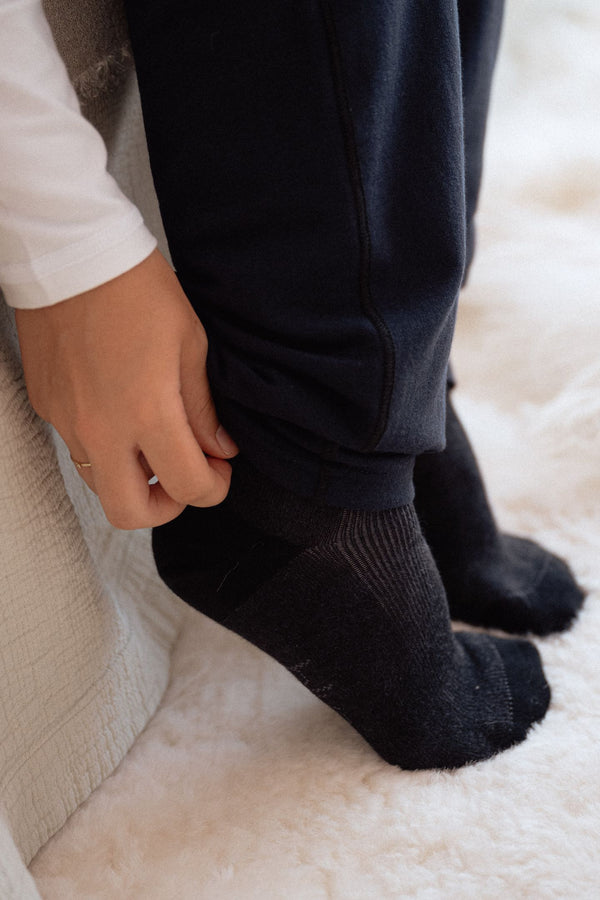
- Check the cuff is wide and non-binding, so it doesn't dig in or leave a deep mark.
- Look for a smooth, tagless inside, with nothing stitched in to press on the skin.
- Pick a light, breathable knit that won't feel hot and bulky inside a shoe.
- Follow your doctor's or podiatrist's advice on checking your feet and choosing footwear.
What about knee-high socks?
Knee-high socks follow the same rules, with one extra point: the higher the sock reaches, the more the cuff matters.
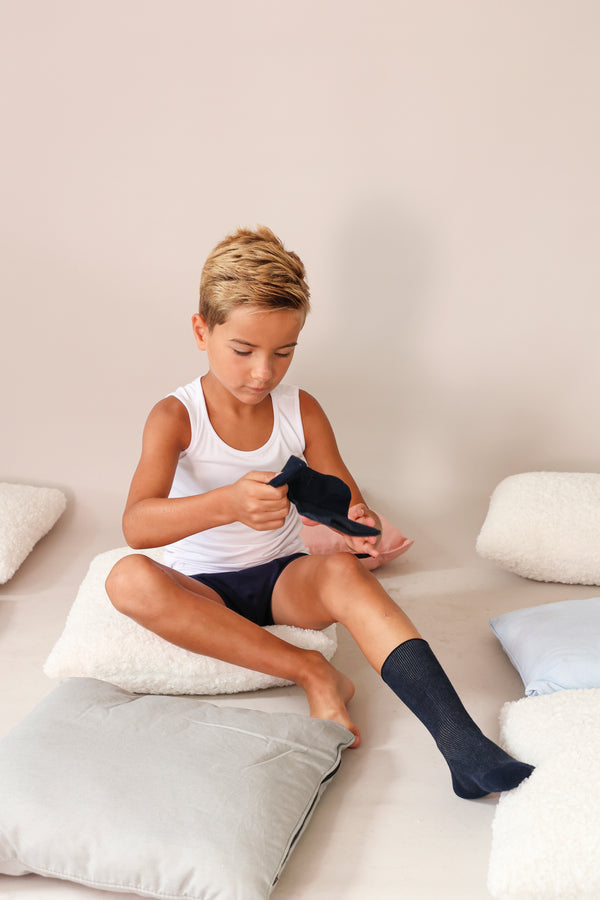
A knee-high sock covers the calf, so a firm elastic band at the top presses there instead of at the ankle. If your legs swell during the day, that band can leave a deep ring. A seamless knee-high sock with soft, even stretch avoids that, while the flat toe keeps the front of the foot calm. Read more about knee-high socks that leave no marks, or browse the seamless knee-high socks.
Why bamboo adds to the comfort
A seam-free toe solves the ridge, and a soft fibre does the rest. Bamboo viscose is naturally soft, breathable and moisture-wicking, so the sock feels light and gentle and helps keep feet dry rather than hot and clammy. For feet that are sensitive or easily irritated, that smooth softness matters as much as the missing seam. Our guide to fabrics that don't itch explains why fine, smooth fibres sit so much more calmly against the skin.
The Blusss seamless bamboo SENS socks
The Blusss seamless bamboo SENS socks are made with a flat, seam-free toe and a soft, non-binding cuff, in breathable bamboo viscose. With no toe seam and a wide cuff, they are a comfortable choice for sensitive feet. They look like ordinary socks and are soft enough to forget you are wearing them. They remain everyday sensory-friendly socks rather than a medical product, so they sit alongside — not in place of — what your healthcare team recommends. From years of designing seam-free socks and underwear for sensitive skin, our consistent experience is that removing the toe seam is the single change people notice most.
When to check with your doctor or podiatrist
Seamless socks are about comfort — they are not a treatment. If you have neuropathy or diabetes, your healthcare team may give you specific advice about foot care and checking your feet for changes, and that advice comes first. If you notice changes in sensation, sores that are slow to heal, or any other foot concern, speak to a healthcare professional.
Key takeaways
- Seamless socks remove the thick toe seam — the biggest irritation in an ordinary sock for sensitive feet.
- With no toe seam and a wide cuff, they are a comfortable choice for sensitive feet.
- Check a sock is truly seamless by turning it inside out and feeling for a flat, smooth toe.
- In a knee-high sock, a non-binding cuff matters even more, because it sits on the calf.
- Soft, breathable bamboo adds to the comfort by keeping feet light, gentle and dry.
- They are everyday sensory-friendly socks, not medical devices — follow your doctor's or podiatrist's foot-care advice first.
FAQ
Are seamless socks good for neuropathy?
Many people find seamless socks more comfortable, because there is no toe seam to rub or press on sensitive feet. This is a comfort feature rather than a treatment, so follow any advice from your doctor or podiatrist as well.
What does seamless actually mean in a sock?
It means the toe is finished without a raised, stitched ridge. Instead of a bulky seam across the toes, the inside stays flat and smooth, so there is no hard contact point where sensitive feet notice it most.
How can I tell if a sock is really seamless?
Turn it inside out and run a finger across the toe. If you feel a hard, raised line, the sock has a seam; if it feels flat and smooth, it is genuinely seam-free.
Are knee-high socks a good option for sensitive feet?
They can be, as long as the top is non-binding. On a knee-high sock the cuff sits on the calf, so a tight elastic band there is felt all day and can leave a deep mark.
Are Blusss bamboo socks medical or diabetic socks?
No. They are everyday sensory-friendly comfort socks, not medical devices. They have no toe seam and a wide, non-binding cuff, which makes them a comfortable choice for sensitive feet, but they are not a treatment and don't replace anything your healthcare team recommends.
Why is bamboo used for sensitive-feet socks?
Bamboo viscose is soft, breathable and moisture-wicking, so it feels gentle rather than scratchy and helps keep feet dry. That makes it a comfortable choice for feet that are easily irritated.
Should seamless socks also be loose at the top?
Ideally yes. A seam-free toe pairs best with a wide, non-binding cuff, so the sock is smooth at the toe and doesn't dig in at the top — comfortable at both ends.