Comfortable Socks for Diabetes and Neuropathy: What to Look For

If pulling on a pair of socks leaves a tight ring around your ankle, or a thick toe seam you can feel all day, you already know how much socks can matter when your feet are sensitive. For people living with diabetes or neuropathy, comfort at the foot is something many think about more than most — and socks that don't dig in or rub can simply feel better to wear. This guide explains what to look for in soft, seamless, non-binding socks, and how Blusss bamboo socks fit those comfort needs. One thing up front: these are everyday sensory-friendly socks, not medical devices, so always follow the foot-care advice of your own doctor or podiatrist.
What should you look for in socks if you have diabetes or neuropathy?
The features most people look for come down to three things: no tight cuff, no rough seams, and a soft, breathable material. A non-binding cuff holds the sock up without leaving a deep ring; a flat, seam-free toe removes the ridge that can rub inside a shoe; and a soft, breathable fibre like bamboo helps feet stay dry and comfortable through the day. People with diabetes or neuropathy are often advised by their healthcare team to avoid socks that dig in or bunch up — and the comfort logic is the same one behind all sensory-friendly clothing. These are comfort features, not medical functions, so pair them with the advice your doctor or podiatrist gives you.
Peripheral neuropathy: nerve damage, often affecting the hands and feet, that can cause numbness, tingling or reduced sensation. It is commonly associated with diabetes. Because sensation in the feet can be reduced, many people are advised to pay extra attention to foot comfort and to check their feet regularly — the NHS has more on its causes and symptoms.
Why seams and tight cuffs can bother sensitive feet
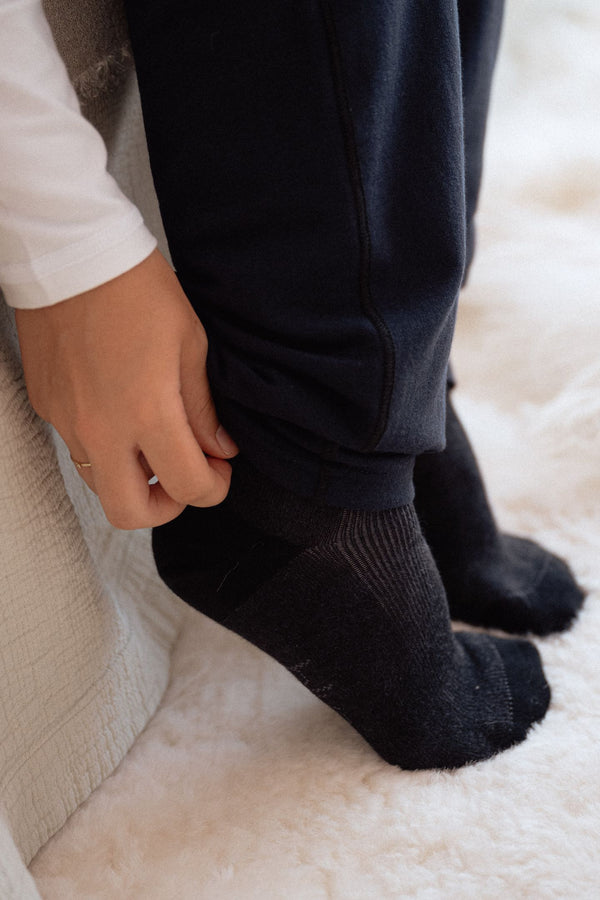
A thick toe seam and a tight elastic cuff are the two things people notice most. The seam creates a hard ridge that presses on the toes inside a shoe, and a gripping cuff can leave a deep mark around the ankle and feel constricting by the end of the day. If your feet are already sensitive — or if you simply dislike that squeezed feeling — a seam-free toe and a wide, non-binding cuff remove both at once. It is the same idea that runs through sensory-friendly clothing in general: the fewer hard contact points between fabric and skin, the more comfortable it feels. Our guide to fabrics that don't itch goes deeper on why smooth, fine fibres sit more calmly against the skin.
Why a soft, breathable material matters
A soft, breathable fibre keeps feet drier and more comfortable, which matters most when you are on your feet all day. Bamboo viscose is naturally soft, breathable and moisture-wicking, so it helps move dampness away from the skin instead of trapping it against the foot. Compared with thick cotton or synthetic socks that can feel hot and clammy, a fine bamboo sock feels lighter and cooler, and the smooth fibres are gentle rather than scratchy. For feet that are sensitive or easily irritated, that softness is the whole point.

How to choose comfortable socks for sensitive feet
If you are not sure where to start, these are the comfort features worth checking for, in order of how much difference they tend to make.
- Look for a flat, seam-free toe, so there is no ridge to rub inside your shoe.
- Choose a wide, non-binding cuff that holds the sock up without leaving a deep mark.
- Pick a soft, breathable fibre like bamboo viscose that wicks moisture and stays light.
- Go smooth and tagless inside, with nothing stitched in to press on the skin.
- Keep a few pairs, so you always have a clean, dry pair to change into.
- Follow your doctor's or podiatrist's advice on checking your feet and choosing footwear.
And what about knee-high socks?
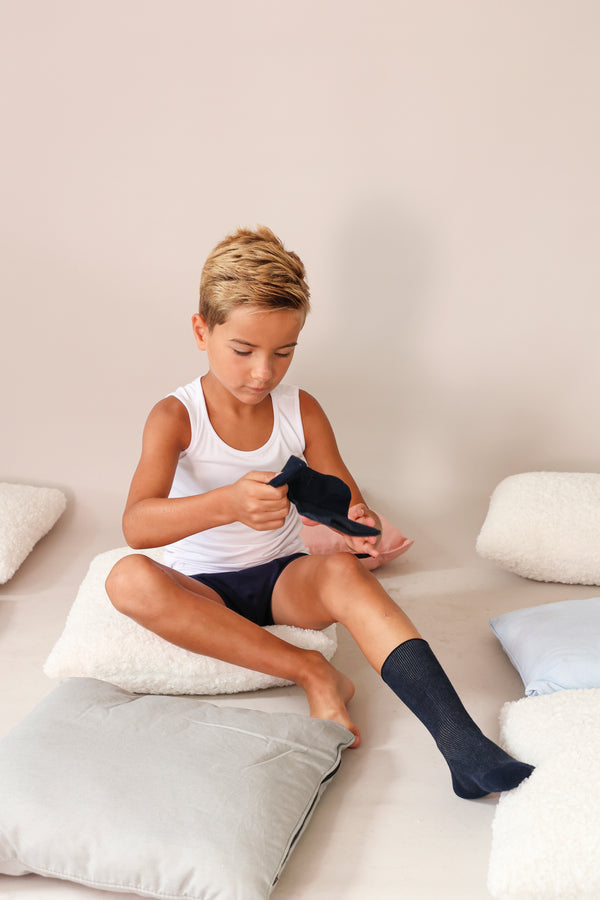
A knee-high sock can be comfortable too, as long as the cuff does not grip — because on a longer sock it sits on the calf instead of the ankle.
That is the part worth checking. A firm elastic band around the calf presses on the same spot all day and can leave a deep ring, which is exactly what most people with diabetes or neuropathy are advised to avoid. A knee-high sock with soft, even stretch and a flat toe keeps both ends comfortable. If you want the extra length for colder days or under trousers, read more about knee-high socks that leave no marks, or browse the seamless knee-high socks. Your doctor or podiatrist can tell you whether a longer sock suits your situation.
Which Blusss socks fit these comfort needs
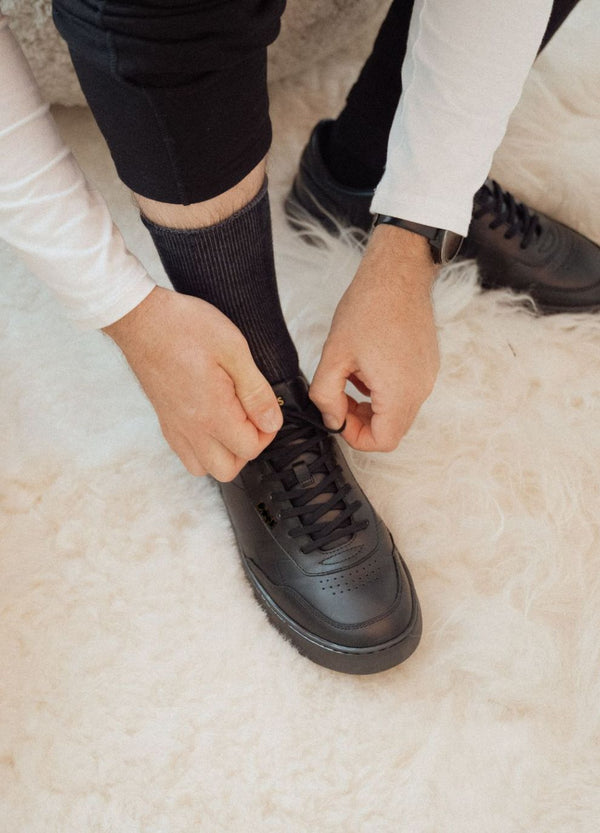
The Blusss seamless bamboo SENS socks are made with a flat, seam-free toe and a soft, non-binding cuff, in breathable bamboo viscose. With no toe seam and a wide cuff, they are a comfortable choice for sensitive feet. They are soft enough to forget you are wearing them, and they look like ordinary socks. To be clear, they remain everyday sensory-friendly socks rather than a medical product, so they sit alongside — not in place of — what your healthcare team recommends. From years of designing seam-free, non-binding socks and underwear for sensitive skin, our consistent experience is that the smallest details — a flat toe, a soft cuff — make the biggest difference to all-day comfort.
When to talk to your doctor or podiatrist
Comfortable socks are about how your feet feel — they are not a treatment. If you have diabetes or neuropathy, your healthcare team may give you specific advice about foot care, checking for changes in your feet, and choosing socks and shoes, and that advice comes first. The NHS has a clear overview of peripheral neuropathy and its symptoms at nhs.uk. If you notice changes in sensation, sores that are slow to heal, or any other foot concerns, speak to a healthcare professional.
Key takeaways
- The comfort features most people look for are a non-binding cuff, a flat seam-free toe, and a soft, breathable material like bamboo.
- Seams and tight cuffs are the things sensitive feet notice most, so removing them makes socks far more comfortable to wear.
- On a knee-high sock the cuff sits on the calf, so a non-binding top matters even more.
- With no toe seam and a wide cuff, the SENS bamboo socks are a comfortable choice for sensitive feet.
- They are everyday sensory-friendly socks, not medical devices — a comfortable choice, but no replacement for your healthcare team's advice.
- If you have diabetes or neuropathy, follow your doctor's or podiatrist's foot-care advice first.
FAQ
What socks are best if I have diabetes or neuropathy?
Many people look for socks with a non-binding cuff, a flat seam-free toe and a soft, breathable material like bamboo, because these feel comfortable and don't dig in or rub. These are comfort features rather than medical ones, so follow any specific advice from your doctor or podiatrist as well.
Can I wear knee-high socks with diabetes or neuropathy?
Many people can, provided the top does not grip. On a knee-high sock the cuff sits on the calf, so a tight elastic band presses there all day. Your doctor or podiatrist can tell you whether a longer sock suits your situation.
Are Blusss socks medical or diabetic socks?
No. Blusss bamboo SENS socks are everyday sensory-friendly comfort socks, not medical devices. They have no toe seam and a wide, non-binding cuff, which makes them a comfortable choice for sensitive feet, but they are not a treatment and don't replace footwear or foot care recommended by your healthcare team.
Why are seamless socks more comfortable?
A traditional sock has a thick toe seam that forms a ridge you can feel inside a shoe. A seam-free toe removes that ridge, so there is nothing pressing on the toes — which makes a real difference for sensitive feet.
Is bamboo a good material for socks?
Bamboo viscose is soft, breathable and moisture-wicking, so it helps keep feet drier and cooler and feels gentle rather than scratchy. That makes it a comfortable choice for feet that are easily irritated.
Should socks for sensitive feet be loose or tight?
A non-binding cuff is usually more comfortable than a tight, gripping one. It holds the sock up without leaving a deep mark around the ankle or feeling constricting, which many people with sensitive feet prefer.
Can I wear these socks every day?
Yes — they are designed as comfortable everyday socks. Keeping a few pairs means you always have a clean, dry pair to change into, which is part of general foot comfort.