Chronic Itch and Sleep: How the Right Nightwear Helps

If your skin itches more at night, you are not imagining it — and you are not alone. Itch genuinely tends to get worse after dark, just as you are trying to sleep, which can turn bedtime into hours of scratching, restlessness and broken sleep. Part of the answer is medical, but part of it is surprisingly simple: what you wear to bed. Soft, breathable, seamless nightwear can lower the heat, friction and irritation that make night-time itch worse. Here is why itch peaks at night, and how the right nightwear helps you rest.
Why does itching get worse at night?
Itch gets worse at night because of natural changes in the body's 24-hour rhythm. As evening comes, skin temperature and blood flow rise, the skin loses more moisture, and levels of the body's natural anti-inflammatory hormone (cortisol) fall — all of which make the skin more reactive and itch feel stronger. With fewer daytime distractions, that itch is also simply harder to ignore.
The Cleveland Clinic describes this as nocturnal pruritus and notes it is more common in people with eczema, psoriasis, allergies, or who are over 65. A clinical review in the Journal of the American Academy of Dermatology explains the mechanism in more detail: at night the skin warms through increased blood flow, water loss through the skin rises, and the drop in cortisol weakens the body's anti-inflammatory response — a combination that can intensify itch.
What is nocturnal pruritus? Nocturnal pruritus is the medical term for itching that becomes worse at night. It is driven by the body's circadian rhythm: in the evening the skin gets warmer, loses more moisture and has less anti-inflammatory cortisol, so itch feels stronger. It is common in eczema, psoriasis and dry, sensitive skin, and it can seriously disrupt sleep.
How does nightwear affect night-time itch?
Nightwear affects night-time itch through heat, friction and moisture — the same factors that already rise overnight. Thick, synthetic or tight pyjamas trap heat and sweat against warming skin, while seams and labels rub the very areas that itch most. Soft, breathable, seamless nightwear does the opposite: it lets heat and moisture escape, removes the seams and labels that irritate, and keeps the skin calmer through the night.

What to look for in nightwear for itchy, sensitive skin
Look for nightwear that stays cool, soft and friction-free all night. The most sleep-friendly pieces share a clear set of features — use this as a checklist:
- Soft, breathable fabric such as bamboo or organic cotton that lets heat and moisture escape.
- Seamless or flat-seam construction, so nothing rubs the areas that itch most.
- No stitched-in labels — printed or tagless designs instead of scratchy care tags.
- A loose, non-binding fit that does not trap heat or press into the skin.
- Light layers you can adjust, so you can stay cool without getting cold.
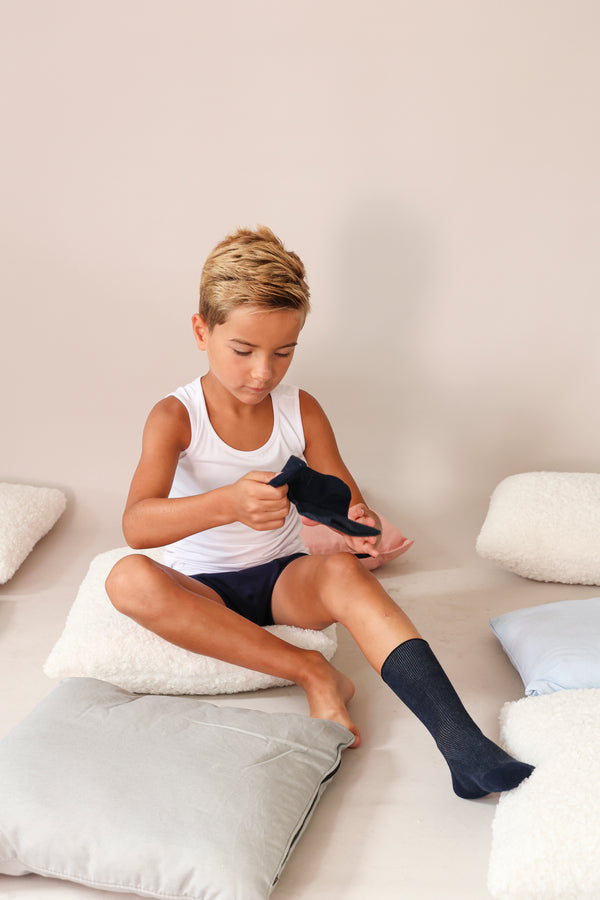
- Warm, soft socks if cold feet keep you awake — warming the feet can help you fall asleep faster.
- Fragrance-free washing, with no fabric softener, so nothing irritating is left on the fabric.

Small habits that calm itch at night
Alongside the right nightwear, a few simple habits help. Keep the bedroom cool, moisturise with a fragrance-free cream before bed, and choose soft, breathable bedding so the skin does not overheat under the covers. People who live with chronic itch often say that lowering the temperature and removing anything scratchy — in both nightwear and bedding — makes the biggest difference to how well they sleep.

Nightwear that helps you rest
For anyone living with chronic itch, nightwear is not just comfort — it is part of protecting sleep. When the fabric against your skin stays soft and cool instead of hot and scratchy, there is less to wake you and less to scratch. Our guide to which fabrics don't itch can help you choose the gentlest materials, and our overview of how sensory-friendly clothing helps with skin problems explains how it all connects.
At Blusss we design soft, seamless, breathable layers in bamboo and organic cotton — easy to sleep in and gentle on reactive skin. You can explore our skin- and sensory-friendly clothing and start with one soft layer for calmer nights.
FAQ
Why is my skin so itchy at night?
As evening comes, the skin warms, loses more moisture and has less anti-inflammatory cortisol, so itch feels stronger. With fewer distractions at night, it is also harder to ignore.
Can nightwear really help with itchy skin?
Yes. Soft, breathable, seamless nightwear reduces the heat, friction and irritation that make night-time itch worse, which can help you sleep more calmly.
What is the best fabric for nightwear if I have itchy skin?
Soft, breathable natural fibres like bamboo and organic cotton are usually best, because they let heat and moisture escape and rarely prickle.
Should pyjamas be loose or tight for sensitive skin?
Loose. A non-binding fit traps less heat and presses less on the skin, while tight nightwear can rub and overheat areas that already itch.
Does keeping cool at night reduce itching?
Often, yes. A cooler bedroom and breathable nightwear and bedding help stop the skin overheating, which is one of the things that makes itch worse overnight.
When should I see a doctor about night-time itch?
If itch regularly disrupts your sleep, lasts more than a couple of weeks, or comes with other symptoms, it is worth speaking to a doctor to check for an underlying cause.
Key takeaways
- Itch genuinely peaks at night, because the skin warms, loses moisture and has less anti-inflammatory cortisol — which is why it so often disrupts sleep.
- Soft, breathable, seamless nightwear in bamboo or organic cotton lowers the heat, friction and irritation that make night-time itch worse.
- Pair gentle nightwear with a cool bedroom, fragrance-free moisturiser and soft bedding, and see a doctor if itch keeps breaking your sleep.