Clothing for Sensory Overload: How the Right Fabric Lowers Daily Stress

On a day when everything already feels like too much — noise, light, people, screens — the last thing you need is your own clothes adding to it. Yet a scratchy collar, a tight waistband or a fabric that won't stop prickling is exactly that: one more stream of input the brain has to handle. Clothing is one of the few sensory sources you can actually control, and choosing soft, predictable pieces can quietly lower the total load. This guide explains how the right clothing helps with sensory overload, why fabric matters most, and what to look for.
Can the right clothing really help with sensory overload?
Yes — not by treating overload, but by removing one constant source of it. Sensory overload happens when too much input arrives at once and the brain can't filter it all. Most of that input you can't switch off, but clothing touches the skin every second of the day, so soft, seam-free, predictable clothing takes one steady stream of signals out of the mix. It is one less thing demanding attention, which many people find leaves a little more capacity for everything else. This is about comfort and lowering daily friction, not a treatment — it works best alongside whatever else helps you. For causes, symptoms and other ways to settle, read feeling overstimulated? 7 ways to calm your nervous system.
Sensory overload: when one or more senses receive more input than the brain can comfortably process at once, leaving you overwhelmed, drained or unable to focus. It is common among autistic people and others with sensory sensitivities. Reducing any single source of input — including uncomfortable clothing — can make the overall load easier to manage.
Why clothing is a hidden source of sensory load
Clothing adds to sensory load because it is the one input that never pauses — it is in contact with the skin all day, everywhere at once. A rough seam, a label, a tight band or a prickly fabric sends a low, constant signal, and for people who experience touch intensely that signal doesn't fade into the background. A 2021 study in the Journal of Autism and Developmental Disorders looked at how clothing and tactile sensitivity are experienced day to day. Because clothing is always there, making it soft and predictable removes a source of input that otherwise runs in the background from morning to night. For children, the classroom adds its own layer of input — see how clothing can help with sensory overload at school.

What to wear to reduce sensory load
If you want clothing that adds as little as possible to a full day, these are the things that help most.
- Soft, fine-fibre fabric like bamboo viscose or organic cotton that feels smooth rather than prickly.
- Seamless or flat-seam construction and printed, tag-free labels, so there is nothing to rub or scratch.
- A relaxed, non-binding fit with soft waistbands and cuffs that don't grip.
- Familiar, predictable pieces you already know feel right — repeating favourites removes surprises.
- Breathable layers you can add or remove, so you can adjust as temperature and tolerance change.
- Calm, consistent textures — no stiff prints, sequins or rough panels.
Why fabric matters most
Of all these, fabric does the most work, because it covers the largest area of skin for the longest time. Fine, smooth fibres like bamboo viscose and organic cotton bend against the skin and breathe, so they stay quiet and cool; coarse, stiff or heat-trapping fabrics keep making themselves felt. On a high-input day, that difference between a fabric you forget and one you keep noticing is exactly the difference that matters. Our guide to which fabrics don't itch explains why fine fibres feel so much calmer.
Blusss soft, predictable basics
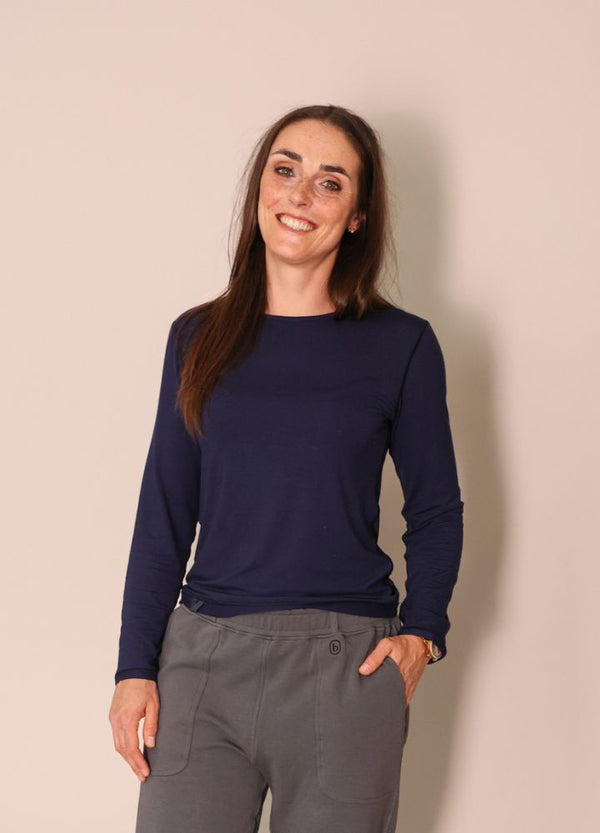
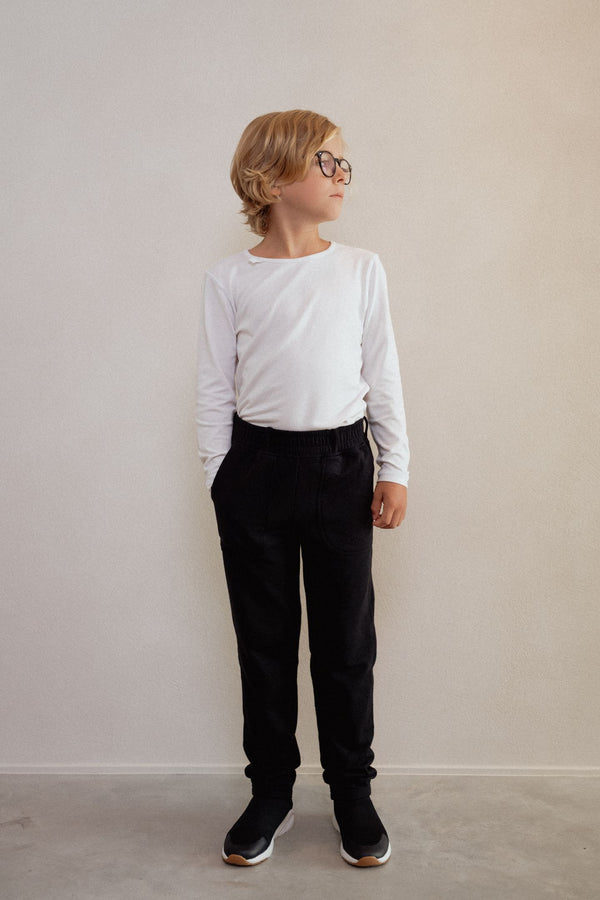
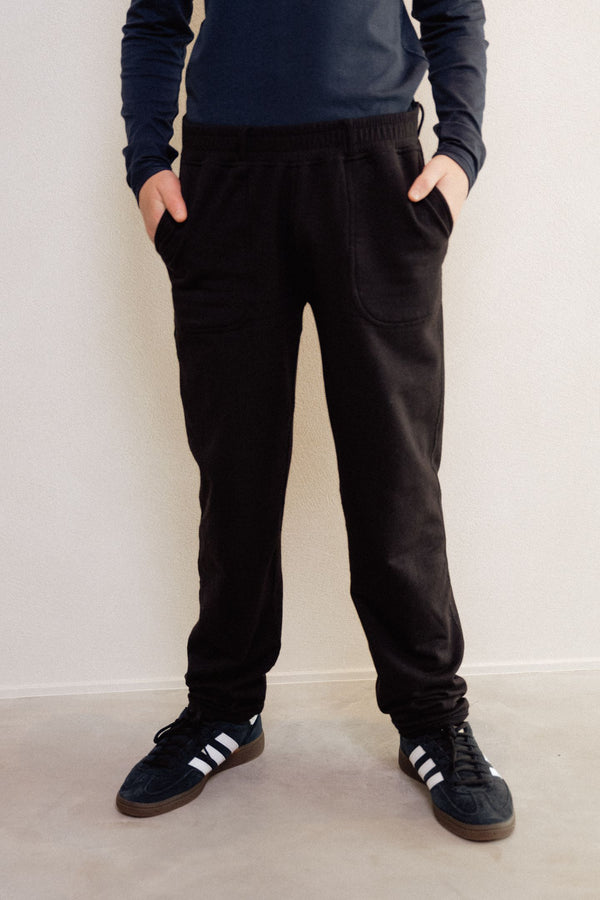
Blusss basics are designed to be the quiet part of your day. The AIR TEE and AIR LONG bamboo long sleeve are soft, seam-free and tag-free in calm, neutral colours; the AIR SLIM trousers swap a stiff button and zip for a soft, non-binding waistband. Because they feel the same every time you put them on, they are easy pieces to repeat on the days when you have no spare attention to give. After years of designing seam-free, tag-free clothing with and for sensory-sensitive adults, our consistent experience is that predictable, soft basics are the ones people reach for first on a hard day.

FAQ
Can clothing help with sensory overload?
It can remove one constant source of sensory input. Soft, seam-free, predictable clothing takes the steady signal of uncomfortable fabric out of the mix, which many people find lowers their overall load. It is a comfort choice, not a treatment.
What clothing is best on a high-sensory day?
Soft, familiar pieces in fine fabrics like bamboo or organic cotton, with no seams, tags or tight bands, and a relaxed fit. Repeating clothes you already know feel right removes surprises.
Why does uncomfortable clothing feel worse when I'm overwhelmed?
When the brain is already handling a lot of input, it has less capacity to filter out a scratchy seam or tight waistband, so the same discomfort can feel much more intense than usual.
Does fabric really make a difference?
Yes. Fabric covers the most skin for the longest time, so a soft, breathable fibre that you forget is wearing makes a bigger difference than almost any other clothing detail.
Is sensory overload only an autistic experience?
No. It is common in autistic people, but also in those with ADHD, sensory processing differences, anxiety or migraines, and anyone can feel overwhelmed by too much input at once.
Can the same clothing help on calmer days too?
Yes. Soft, predictable basics are comfortable every day, not only when you are overwhelmed, which is part of why they are easy to rely on.
Key takeaways
- Clothing is one sensory input you can control, and it touches the skin all day, so soft, predictable pieces remove one steady source of load.
- It helps by reducing input, not by treating overload — a comfort choice that works alongside whatever else helps you.
- Look for soft fine-fibre fabric, no seams or tags, a relaxed fit, and familiar pieces you can repeat.
- Fabric matters most because it covers the most skin for the longest time.
- Sensory overload isn't only an autistic experience — these same basics help anyone sensitive to too much input.