School Uniforms and PE Kit for Sensory-Sensitive Children

For a sensory-sensitive child, a school day is a long time to spend in clothes they didn't choose. A uniform is worn for hours with no escape, a PE kit changes the texture against their skin halfway through the day, and a single scratchy seam or stiff waistband can nag from the first lesson to the last. None of that means a child is being difficult — their nervous system simply registers touch more intensely, so school clothing can quietly drain the energy they need for learning and friendships. This is a practical wardrobe guide: what to look for in a school uniform, PE kit and the basics underneath, so getting dressed for school is one less thing working against your child.
Why is a school uniform so hard for a sensory-sensitive child?
A uniform takes away the one lever a sensitive child usually has: choice. At home they can avoid the jumper that itches; at school they're often required to wear it all day, whatever it's made of. Add a PE kit, a change of fabric, a tight collar or a stiff waistband, and the school day becomes a stack of small, unavoidable sensory demands. That's why a uniform that looks completely ordinary to everyone else can be a real daily struggle for one child.
The school-uniform problem: a sensitive child has to wear fixed garments — often in fabrics they didn't choose — for a whole day, with no way to take a break from an itchy seam, label or tight band. The fix isn't to fight the uniform, but to make the parts you can control (socks, underwear, base layers, PE kit, what's worn underneath) as soft, seam-free and non-binding as possible, lowering the overall sensory load.
Why school clothing deserves extra thought
Clothing is already a near-constant input for a sensitive child, and at school it's combined with noise, lights, transitions and crowds. The American Academy of Pediatrics notes that children with sensory processing differences can be strongly affected by everyday sensations, so anything you can take off the pile helps — and clothing is one of the few things you fully control. We've written separately about how itchy clothing affects a child's concentration in the classroom; here the focus is purely practical — what to actually put them in. To be clear, this is about comfort, not treatment: soft clothing lowers the daily load, but it isn't a therapy and doesn't replace professional support.

The school wardrobe, garment by garment
You can't always change the uniform, but you can choose the gentlest version of each piece — and make everything next to the skin as soft as possible.
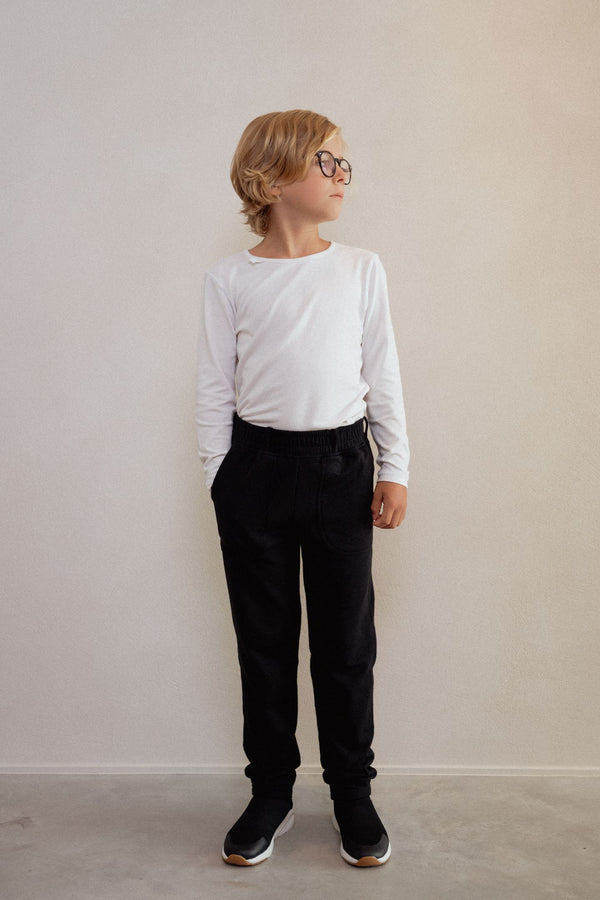
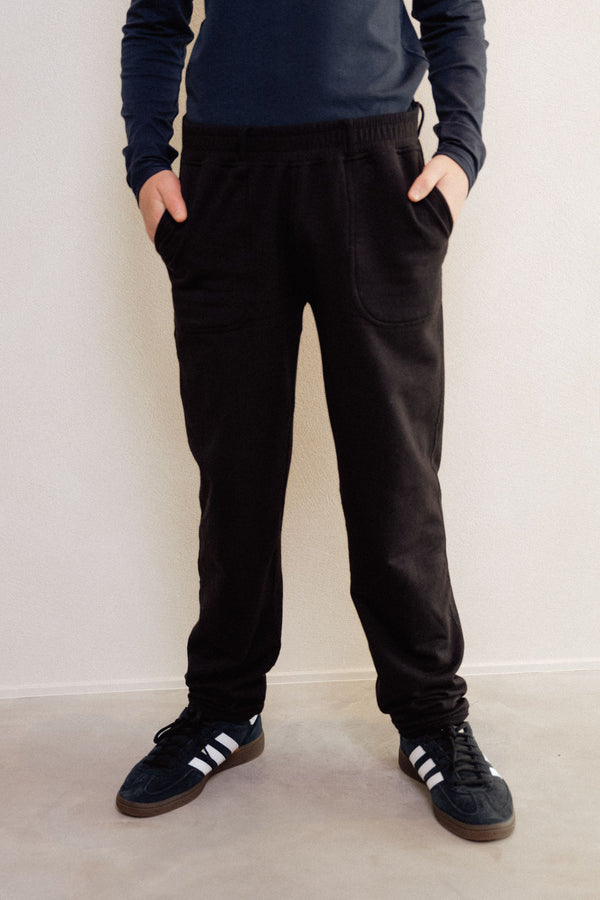
- Trousers: a soft, non-binding waistband instead of stiff school trousers with a hard button and tight elastic. Seam-free, stretchy options in a uniform-neutral colour work under most uniform rules.
- Tops and long sleeves: a smooth, tag-free top or long sleeve under or instead of a scratchy uniform shirt; a soft long sleeve also stops a stiff jumper touching the skin directly.
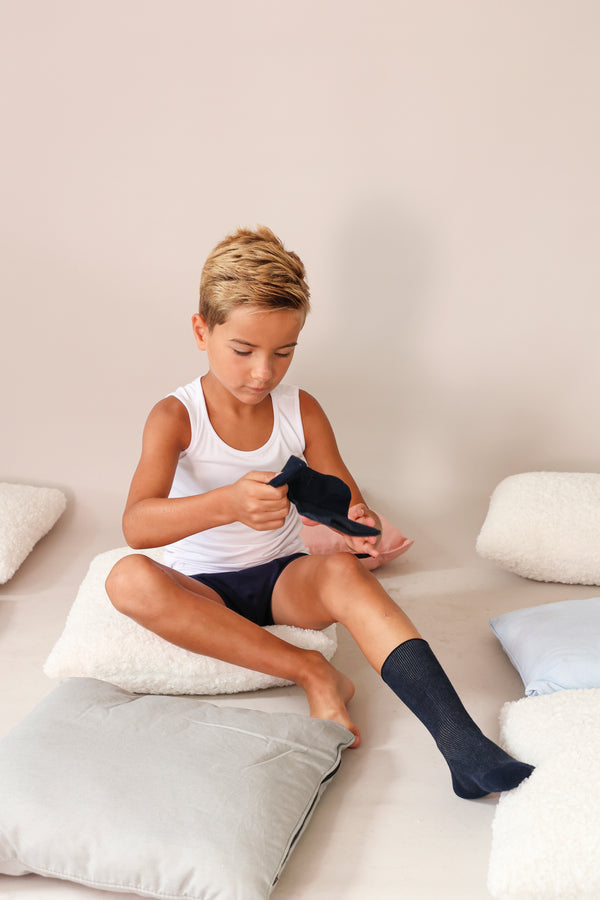
- Socks: seamless at the toe, in a uniform colour (white, blue, grey or black). The toe seam is the single most common trigger, and stiff school shoes make it worse.
- Underwear: seam-free, tag-free briefs or boxers, plus a soft tank top, so the layer closest to the skin stays calm under everything else.
- PE and gym kit: the mid-day change is its own hurdle. Soft, seam-free PE pieces and a quick, predictable changing routine make it less of a flashpoint.
- A spare set: keep a soft spare (especially socks and underwear) in the bag, so a wet or suddenly unbearable item doesn't derail the whole afternoon.
Working with a compulsory uniform
If the uniform itself is non-negotiable, focus on what you can change. Put soft, seam-free base layers underneath so the rough uniform fabric rarely touches skin directly. Match soft basics to the required colours so they pass as uniform. Pre-wash everything a few times before term starts to soften it. And if a specific item is genuinely unwearable, it's worth a calm conversation with the school — many will allow a soft alternative once they understand it's a sensory need, not a preference. For the wider back-to-school picture beyond clothing, our back-to-school tips for sensitive children cover classroom visits, teacher notes and after-school decompression.
Blusss for the school wardrobe
Blusss basics are built to disappear under a uniform: seam-free, tag-free, non-binding, in soft fibres, and in uniform-friendly colours. The AIR SLIM trousers (black or blue) swap a stiff waistband for a soft one; the bamboo long sleeve (white or blue) layers smoothly under a shirt or jumper; the seamless SENS socks come in white, blue and black for the toe-seam problem; and the seam-free boxers, briefs and tank top keep the layer closest to the skin calm. Blusss makes everyday sensory-friendly clothing, not medical garments, and it isn't a treatment — if school clothing is a daily struggle, an occupational therapist can also help.
FAQ
My child's school requires a uniform — what can I actually change?
Usually the base layers, socks, underwear and PE kit, and often the trousers. Put soft, seam-free items underneath and in uniform colours so the rough parts rarely touch the skin, and ask the school about a soft alternative for any genuinely unwearable item.
What should a sensory-sensitive child wear under a scratchy uniform?
A smooth, tag-free long sleeve or tank top and seam-free underwear, so the uniform fabric sits over a soft layer rather than directly on the skin.
Why is PE kit such a problem?
It forces a mid-day change of texture and routine, which is a lot for a sensitive child. Soft, seam-free PE pieces and a predictable changing routine make it easier.
What colour socks work for school uniforms?
Seamless SENS socks come in white, blue, grey and black, covering most uniform requirements while removing the toe seam that triggers many children.
Will the school accept sensory-friendly alternatives?
Many will, once they understand it's a sensory need rather than a preference. A calm conversation, and matching the required colours, makes it an easy yes for most schools.
Can comfortable school clothing improve my child's learning?
It can remove one constant distraction, which many children find calming — but clothing isn't a treatment and doesn't change a child's abilities. Think of it as lowering the load, not fixing anything.
Key takeaways
- A uniform removes a sensitive child's usual lever — choice — so they wear fixed fabrics all day.
- Control what you can: soft, seam-free, non-binding socks, underwear, base layers, trousers and PE kit.
- Match soft basics to uniform colours so they pass as uniform.
- The mid-day PE change and the toe seam in socks are common flashpoints.
- It's comfort, not treatment — talk to the school, and to a professional if it's a daily struggle.