Clothing for Fibromyalgia and Painful Skin

For most people, getting dressed is automatic. For someone living with fibromyalgia or allodynia, it can be one of the hardest parts of the day. When the skin is more sensitive than usual — or when light touch itself becomes painful — a seam, a label or a tight waistband stops being a minor annoyance and becomes something the body can't ignore. Choosing soft, seam-free, non-binding clothing won't change the condition, but it can take away one steady source of physical irritation. This guide explains what makes clothing more comfortable when skin is painful, the features to look for, and how Blusss designs for it.
What makes clothing comfortable when skin is painful or sensitive?
Clothing is most comfortable on painful or sensitive skin when it removes the things that press, rub or scratch: no raised seams, no stitched-in labels, soft fine-fibre fabric and a relaxed, non-binding fit. The aim is for the garment to make as little contact-pressure as possible and to feel the same everywhere, so there are no hard points the skin keeps registering. The clothing isn't doing anything to the body — it is simply not adding to what the skin already has to deal with.
Allodynia: pain caused by something that wouldn't normally hurt, such as light touch, the weight of clothing or a seam against the skin. It is common in fibromyalgia and some other conditions, and it is why ordinary clothes can feel genuinely painful rather than just uncomfortable — making what touches the skin matter far more than usual.
Why clothing can hurt with fibromyalgia
Fibromyalgia is associated with heightened sensitivity to touch, pressure and pain, so sensations that most people filter out can register strongly. The NHS describes fibromyalgia as involving widespread pain and increased sensitivity. When the body is already turned up like that, a rough seam or a gripping waistband isn't a small thing — it is one more painful signal on top of the rest. Soft, seam-free clothing simply removes those extra signals. To be clear, comfortable clothing is not a treatment for fibromyalgia or allodynia and won't change the underlying condition; it is a way to stop your clothes from making a hard day harder.

The features that matter most
If your skin is painful or easily irritated, these are the details worth checking before you buy.
- Seamless or flat-seam construction, so nothing presses a hard ridge into the skin.
- No stitched-in labels — printed or tag-free designs instead of scratchy care tags.
- Soft, fine-fibre fabric such as bamboo viscose or organic cotton that feels smooth, not prickly.
- A relaxed, non-binding fit, with soft waistbands and cuffs that don't grip or leave marks.
- Lightweight fabric, so there is less weight resting on sensitive skin.
- Consistent, predictable texture all over — no rough patches, stiff prints or hard trims.
- Easy on and off, so dressing on a high-pain day takes less effort.
Which fabrics are gentlest on painful skin?
The gentlest fabrics are soft, fine-fibred, lightweight and breathable: bamboo viscose and organic cotton lead, with modal and Tencel close behind. Their fine fibres bend against the skin instead of prickling, and they don't trap heat, which matters when warmth or sweat adds to the discomfort. Coarse wool, stiff denim and many synthetics tend to be the opposite. Our guide to which fabrics don't itch compares the options in detail.

Blusss clothing for sensitive, painful skin
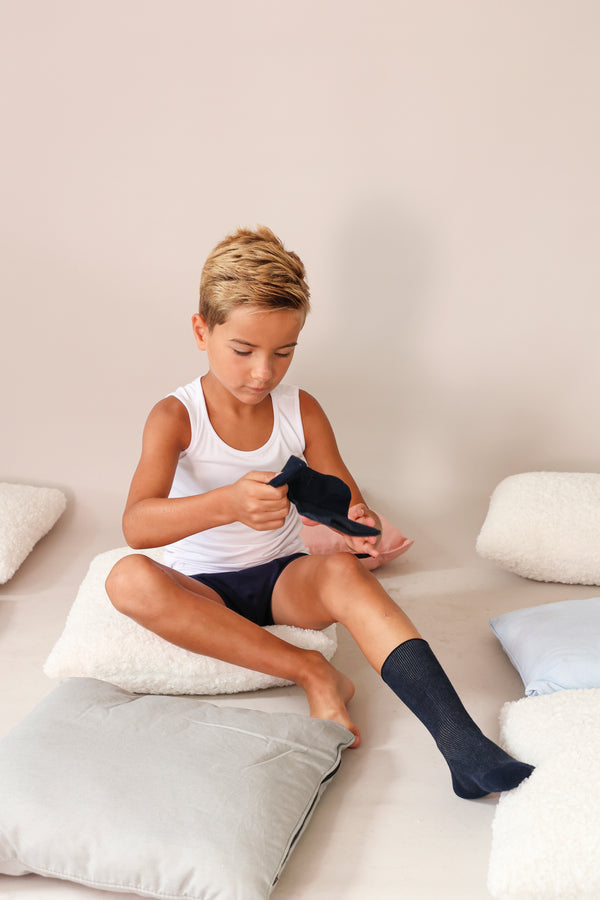
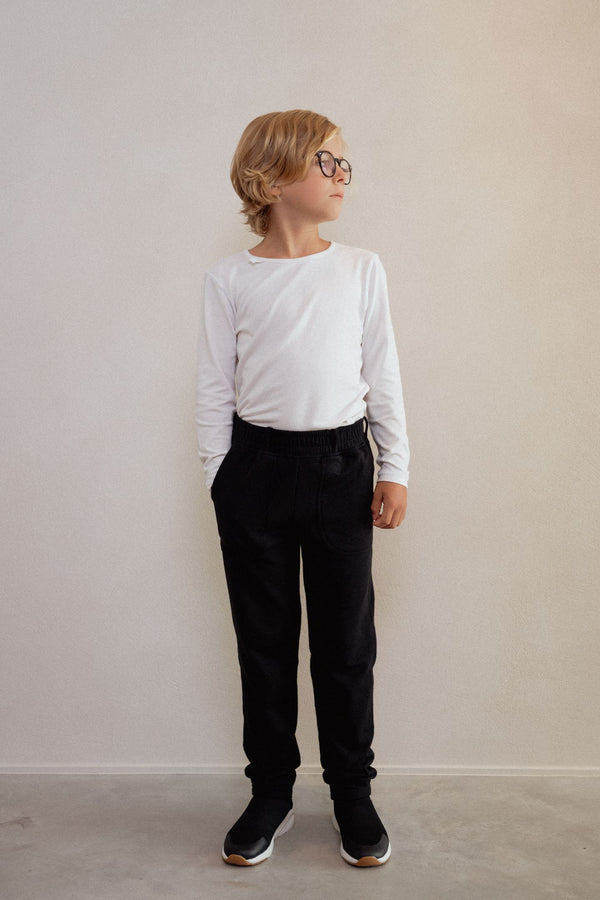
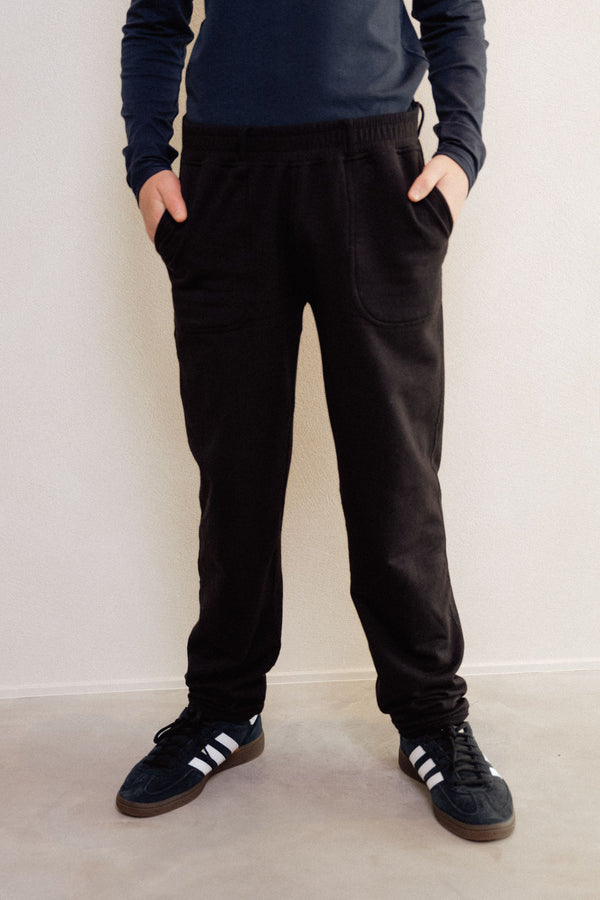
Blusss is built around soft, seam-free, non-binding basics, which is exactly what tends to help when skin is painful. The AIR TEE and AIR LONG bamboo long sleeve are smooth and tag-free; the AIR SLIM trousers and soft comfort jeans swap stiff waistbands for soft, non-binding ones; and the SENSE seam-free underwear and seamless bamboo socks remove the seams and bands that press most. After years of designing seam-free, tag-free clothing with and for people with sensitive skin, our consistent experience is that removing seams, labels and tight bands is the change people notice first. Blusss makes everyday sensory-friendly clothing, not medical garments, and it is not a treatment for fibromyalgia or any pain condition — if your symptoms are affecting daily life, your doctor is the right person to talk to.
Where to start
If replacing clothes feels overwhelming, start with whatever hurts most — often socks, underwear or a scratchy everyday top — and build from there. Getting the layer closest to your skin right tends to make the biggest difference, because it sits against you all day with nothing to soften it. From there you can add soft bottoms and layers as you go.
FAQ
What clothing is best for fibromyalgia?
Soft, seam-free, tag-free clothing with a relaxed, non-binding fit, in fine fabrics like bamboo or organic cotton. The goal is to remove seams, labels and tight bands that press on sensitive skin.
Why do my clothes hurt my skin?
Conditions like fibromyalgia can heighten sensitivity to touch and pressure, and allodynia can make light touch genuinely painful. Seams, labels and tight waistbands then become painful signals rather than minor irritations.
Can the right clothing reduce pain?
Comfortable clothing can remove one source of physical irritation, which many people find helps day to day. It is a comfort choice, not a treatment, and it doesn't change the underlying condition.
What fabrics are best for painful or sensitive skin?
Soft, fine, lightweight, breathable fibres like bamboo viscose and organic cotton are usually best, because they feel smooth and don't trap heat. Coarse wool and stiff synthetics tend to be worse.
Are compression or seamless clothes better for fibromyalgia?
It is very individual. Some people find gentle, even pressure soothing, while others find any pressure painful and prefer loose, non-binding clothing. It is worth seeing what your own skin prefers, and asking your doctor if unsure.
Is sensory-friendly clothing only for fibromyalgia?
No. It also suits people with allodynia, chronic pain, sensitive skin, autism or sensory sensitivity, or anyone who finds seams and tight clothing uncomfortable.
Key takeaways
- When skin is painful or sensitive, clothing is most comfortable with no seams, no labels, soft fine fabric and a relaxed, non-binding fit.
- Fibromyalgia can heighten sensitivity to touch, and allodynia can make light touch painful — so what touches the skin matters far more.
- Soft, seam-free clothing removes one source of irritation; it is a comfort choice, not a treatment.
- Bamboo viscose and organic cotton are among the gentlest, lightest, most breathable fabrics.
- Start with the layer closest to your skin, and ask your doctor about anything affecting daily life.